
Ketamine Troches: Insurance Coverage Realities and Patient Pay Considerations
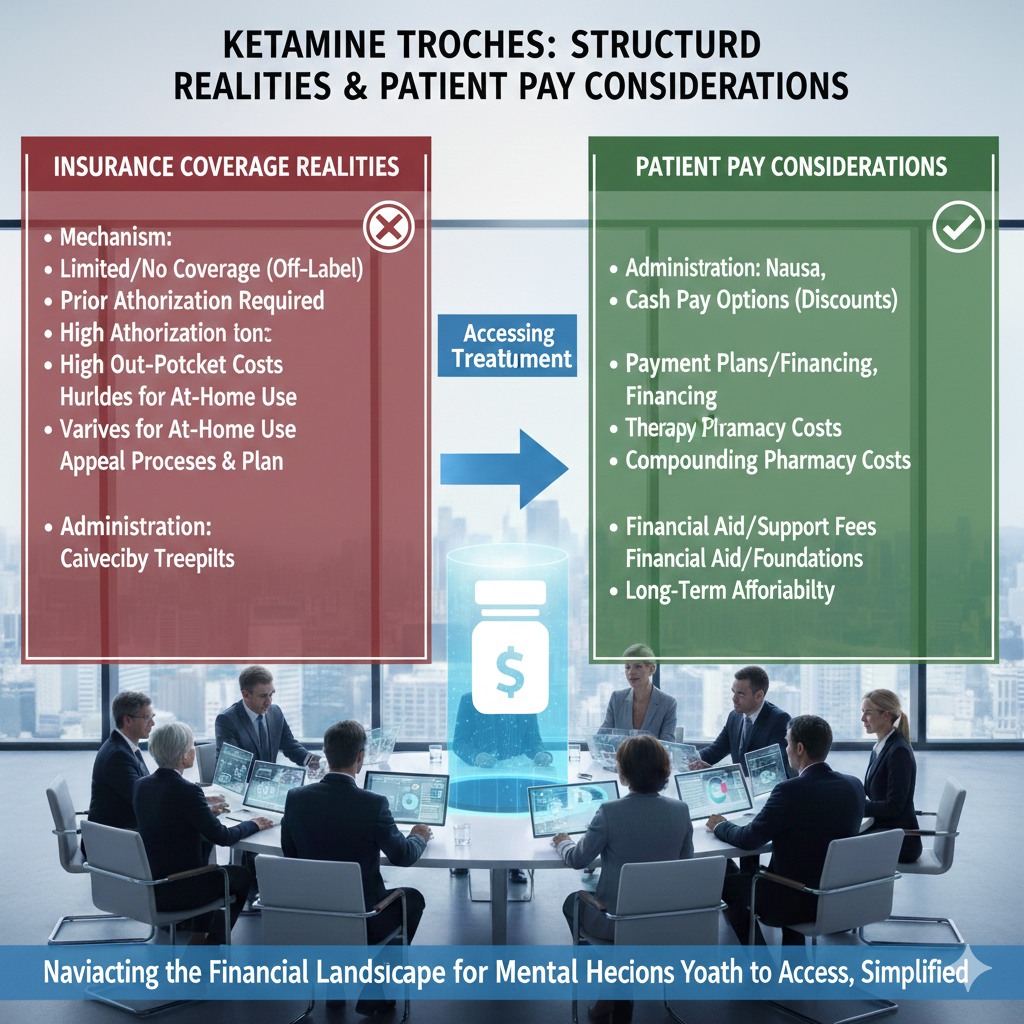
As mental health treatments evolve, ketamine troches have emerged as a promising option for patients struggling with treatment-resistant mood disorders like depression and anxiety. These sublingual formulations of ketamine offer a more convenient alternative to intravenous (IV) treatments, allowing patients to dissolve the medication under their tongue for faster absorption. However, despite their growing popularity and effectiveness, navigating the insurance coverage landscape and understanding patient pay considerations can be challenging.
In this blog, we’ll explore the realities of insurance coverage for ketamine troches, how patient financial responsibility plays a role, and how individuals can manage costs to access this potentially life-changing treatment.
Insurance Coverage: The Uncertain Landscape for Ketamine Troches
One of the biggest hurdles for patients seeking ketamine troches is understanding whether their insurance will cover the treatment and, if so, how much they will need to pay out of pocket. Ketamine, particularly in off-label forms like troches, can present challenges when it comes to insurance reimbursement. Here's why:
The Off-Label Dilemma
Ketamine troches are typically considered an off-label use of the medication for mood disorders. While ketamine has been FDA-approved for anesthesia and has shown significant promise for mental health conditions, sublingual formulations like ketamine troches have not yet received formal FDA approval for treating depression, anxiety, or other mood disorders. This means that insurers may classify ketamine as an experimental or investigational treatment, which can significantly impact coverage.
In contrast, other forms of ketamine, such as Spravato (esketamine nasal spray), have FDA approval for treatment-resistant depression and may have more straightforward insurance coverage. For patients seeking troches, however, the coverage often depends on the specifics of their insurance plan, which may not always offer reimbursement for off-label treatments.
Coverage Variability by Plan and Region
Insurance coverage for ketamine troches can vary widely depending on the insurance company, plan type, and even region. Some plans may cover the treatment, but only under specific circumstances, such as when all other treatments have failed, or when certain medical documentation proves the necessity of the treatment. On the other hand, some insurance companies may completely deny coverage for off-label ketamine use, including sublingual formulations like troches.
Patients should contact their insurance provider before starting ketamine therapy to confirm whether their plan offers coverage for off-label treatments and, if so, what documentation is needed to secure reimbursement.
Patient Pay Considerations: Costs of Ketamine Troches
Even when insurance coverage exists, patients may still face significant out-of-pocket costs for ketamine troches. These costs can include treatment sessions, pharmacy copays, deductibles, and coinsurance. Let’s break down these expenses.
Treatment Costs
The cost of ketamine troches varies depending on several factors, including the provider, location, and frequency of treatments. A typical course of ketamine therapy often involves several sessions, and while the costs for IV ketamine treatments are well-documented (ranging from $400 to $800 per session), the price of troches is less clear. However, patients can expect to pay similar amounts, with some estimates ranging between $100 to $300 per dose, depending on the pharmacy and formulation.
Given that many patients require a series of treatments, the total cost of a ketamine troche regimen can quickly add up. This cost burden can be especially high for individuals without insurance coverage or for those whose insurance only partially reimburses the expense.
Copays, Deductibles, and Coinsurance
Even if an insurance plan covers ketamine troches, patients are still responsible for copays, deductibles, and coinsurance, which can significantly impact the overall treatment cost. In 2023, the average deductible for an individual in a health insurance plan was reported to be over $1,700, according to the Kaiser Family Foundation. This means that many patients will need to pay out of pocket for their treatments until they meet their deductible.
Additionally, coinsurance where patients pay a percentage of the treatment cost can further increase expenses. For example, if a patient has a 20% coinsurance rate, they may be required to pay $200 for a $1,000 treatment, even after meeting their deductible.
For patients facing high out-of-pocket costs, it's important to work closely with their healthcare provider and insurance company to explore possible payment options, including payment plans, financial assistance programs, and sliding scale fees based on income.
The Role of Health Savings Accounts (HSAs) and Flexible Spending Accounts (FSAs)
Many patients may be able to use Health Savings Accounts (HSAs) or Flexible Spending Accounts (FSAs) to help offset the costs of ketamine troches. Both HSAs and FSAs allow individuals to set aside pre-tax dollars to pay for qualified medical expenses, including prescription medications and treatments like ketamine. However, it’s important to confirm with your HSA or FSA provider that ketamine troches are eligible for reimbursement.
Using these accounts can help reduce the financial burden, making ketamine therapy more affordable for some patients. It’s also worth noting that some insurance companies may offer special programs that help defray costs for patients undergoing ketamine treatment, especially if they have been diagnosed with treatment-resistant depression or other serious mental health conditions.
Strategies for Managing Costs and Improving Access to Ketamine Troches
There are several strategies patients can use to help manage the cost of ketamine troches and improve access to this potentially life-changing treatment.
1. Pre-Authorization and Documentation
Before starting treatment, patients should check with their insurance provider to confirm whether ketamine troches are covered. Obtaining pre-authorization is crucial, as it ensures that the insurance company agrees to cover the treatment. Additionally, patients may need to provide medical documentation that demonstrates the medical necessity of ketamine therapy, especially if previous treatments have failed.
2. Shop Around for the Best Price
Because ketamine troches are often compounded, patients can shop around for different pharmacies to find the best price. Some pharmacies may offer discounts or financial assistance programs that can make the treatment more affordable. It’s worth discussing with the prescribing clinician whether there are any preferred pharmacies that offer discounted pricing or bulk rates for long-term treatment.
3. Financial Assistance Programs
Some ketamine clinics offer financial assistance programs or sliding-scale payment options for patients who are unable to afford the full cost of treatment. It’s worth reaching out to the clinic or provider administering the therapy to inquire about any available programs.
Conclusion:
Ketamine troches offer an exciting alternative to traditional antidepressant therapies, but understanding insurance coverage and patient pay considerations is crucial before beginning treatment. While coverage for ketamine troches can be complicated by its off-label status, patients should proactively work with their insurance providers to clarify coverage details and document medical necessity.
In addition, by exploring financial assistance programs, using HSAs or FSAs, and shopping around for the best price, patients can manage the costs associated with ketamine therapy. Though the financial burden may be significant, the potential benefits of ketamine troches in treating mood disorders can make the investment worthwhile for many individuals.
If you're considering ketamine troches as a treatment option, it’s important to weigh the financial and logistical considerations carefully. Work closely with your healthcare provider and insurance company to understand your options and make the most informed decision possible.

 English