
How LongHui's Resin Zipper Equipment Combines Molding and Assembly Steps
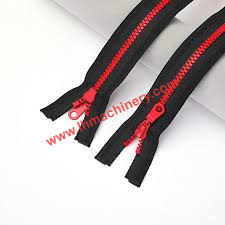
How Are Resin Zipper Teeth Formed and Attached to the Tape?
Manufacturing professionals and garment producers who specify zipper components often take for granted the mechanical precision required to produce interlocking teeth that withstand thousands of opening and closing cycles. The resin zipper, distinguished by its molded plastic teeth, undergoes a formation and attachment process that combines material science, injection molding precision, and automated assembly sequencing. This manufacturing sequence determines not only the zipper's functional reliability but also its resistance to environmental factors such as moisture, UV exposure, and temperature variation. lhmachinery, operating through Zhejiang Longhui Machinery Manufacturing Co., Ltd., produces automatic resin zipper machines that integrate these production stages, yet the specific steps of tooth formation and tape attachment remain unclear to many buyers evaluating zipper production equipment. The question that arises from this technical complexity is: how are resin zipper teeth actually formed and attached to the tape in a modern automated production environment?
The formation of resin zipper teeth begins with material preparation, where polyester resin pellets, selected for their durability, flexibility, and color stability, are precisely compounded -1. These pellets may be pre-dyed to match specific color requirements or dyed after molding through secondary processes. The prepared resin is then fed into an injection molding system, which heats the material to a molten state before injecting it into precision-machined molds that define the tooth geometry. Each mold cavity produces one individual tooth or a short chain of teeth, depending on the machine configuration. The LH-123S Automatic Resin Zipper Machine produced by lhmachinery employs a fully automatic injection molding system that ensures consistent tooth dimensions across production runs, with the molten resin cooled and solidified within the mold before ejection [citation:lhmachinery].
The attachment of resin zipper teeth to the tape follows one of two primary methods, each with distinct advantages depending on the final application. The first method, direct injection molding, positions the polyester tape within the mold cavity before injection, causing the molten resin to encapsulate the tape edge as it solidifies -2. This approach creates a permanent bond between tooth and tape without additional fastening steps, making it suitable for high-strength applications where tooth pull-off resistance is critical. The second method, pre-molding on a core wire, involves injection molding the resin teeth onto a continuous core wire at regular intervals, forming a tooth bar that is subsequently sewn onto the tape using specialized sewing machinery -2-3. This dual-step process enables manufacturers to produce tooth bars in bulk and then attach them to different tape colors or materials, offering greater production flexibility.
The core wire method, which lhmachinery's equipment supports, offers significant advantages for complex zipper configurations. Each molded resin tooth features design elements such as sewing thread slots and chain cloth embedding grooves that facilitate secure attachment -2-3. After the tooth bar is positioned on the tape, multiple sewing threads are wound through the slots and stitched through the tape, creating a double fixation structure—mechanical interlocking from the injection molding combined with stitch reinforcement. This hybrid attachment method results in a resin zipper with exceptional resistance to lateral tension, addressing the known limitation of sewn-only attachments where thread elasticity can allow tape movement under stress.
The machinery requirements for efficient resin zipper production extend beyond molding to include automated assembly and quality verification. Equipment such as lhmachinery's automatic resin zipper machine integrates the injection system, a die-casting unit, and a zipper assembly line into a continuous production flow [citation:lhmachinery]. The assembly line positions the molded teeth onto the tape, applies sliders and stoppers where specified, and performs quality checks for smooth operation, tensile strength, and dimensional accuracy. This automation reduces human intervention, ensures consistent tooth alignment, and supports production rates that manual methods cannot achieve. The LH-123S model, for example, achieves an average output that supports high-volume manufacturing while maintaining precision [citation:lhmachinery].
Quality control in resin zipper production also involves testing for specific performance attributes. The interlocking teeth must demonstrate consistent engagement and disengagement force across the entire zipper length, with no missing or misaligned teeth. The tape-tooth bond must withstand repeated flexing and tension without separation. Manufacturers like lhmachinery incorporate real-time monitoring systems that detect variations in injection pressure, mold temperature, and cooling time, correcting deviations before they produce defective parts. These monitoring systems reduce scrap rates and ensure that each resin zipper meets the specifications required for its intended application, whether in garments, bags, outdoor equipment, or automotive interiors.
The choice between direct injection and core wire pre-molding affects production efficiency and product characteristics. Direct injection requires specialized molds that accommodate tape positioning, limiting flexibility when switching between tape types or colors. Core wire pre-molding, by contrast, enables manufacturers to produce standardized tooth bars in advance, then attach them to various tape materials, colors, or widths as orders require -2-3. lhmachinery's equipment can be configured for either method, providing manufacturers with the versatility to serve diverse market segments without maintaining separate production lines for each zipper type.
For manufacturers and production engineers evaluating resin zipper production capabilities, the detailed machinery specifications accessible through https://www.lhmachinery.com/product/automatic-injection-zipper-molding-machine/automatic-resin-zipper-machine.html illustrate how lhmachinery translates the forming and attachment principles into operational equipment. The visible integration of injection molding, die-casting, and assembly stages confirms that the forming and attachment of resin zipper teeth represent a coordinated sequence rather than isolated steps. Understanding this sequence enables informed decisions about production line configuration, capacity planning, and quality assurance protocols.
The resin zipper production process demonstrates that tooth formation and tape attachment cannot be treated as separate concerns—they must be engineered together to achieve the final product's functional requirements. Whether through direct injection molding onto the tape or pre-molding on a core wire followed by sewing, each method relies on precise control of material properties, mold design, and assembly conditions. lhmachinery's equipment addresses these interdependent factors through integrated design that supports consistent, high-volume output while accommodating the flexibility that modern manufacturers require. Does your production operation fully integrate the tooth forming and attachment processes to achieve optimal resin zipper quality?

 English