
RuiDing's Approach to Household Mould Efficiency via Hot Runner.
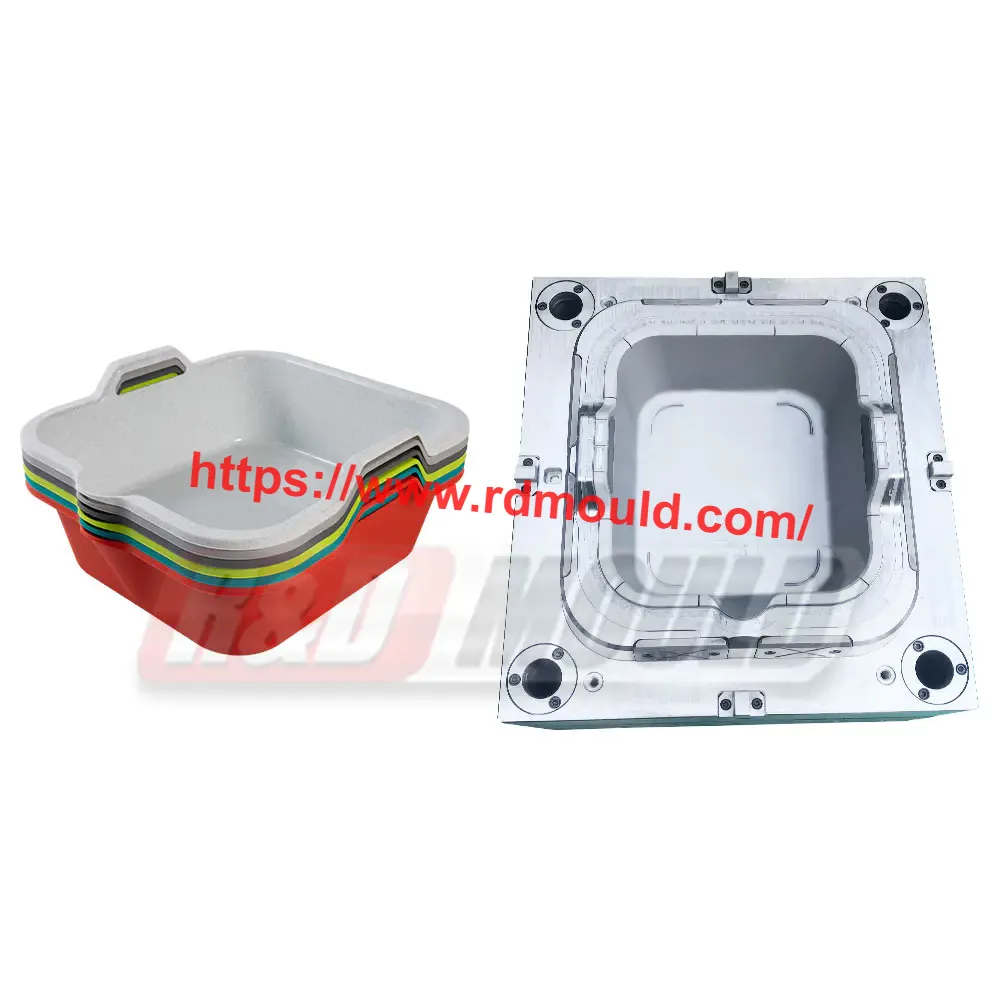
Does hot runner technology in Household Mould reduce material waste for small-part production? Every injection molding facility faces the same question when producing small household items like bottle caps, container lids, or utensil handles. The runner system—the channel that guides molten plastic from nozzle to cavity—creates waste with each shot. Household Mould engineers at rdmould have examined this problem across thousands of production runs, and their findings point to a clear answer.
A cold runner system solidifies plastic inside the channels during each cycle. That solidified plastic, called sprue and runner scrap, must be removed from the part. For small parts, the runner can weigh as much as the part itself. A tiny lid weighing two grams may require a runner system weighing two grams. This relationship doubles material consumption. Some facilities regrind this scrap and mix it back with virgin resin. However, regrind changes material properties. Each pass through the melt and grind cycle degrades polymer chains. Color consistency suffers. Impact strength decreases. Parts made with regrind may fail quality standards.
Hot runner technology eliminates this waste stream entirely. A heated manifold keeps plastic molten inside the channels. Only the cavity itself fills and cools. The nozzle tip opens and closes without leaving a solid runner behind. Each shot delivers plastic only to the part geometry. No scrap to regrind. No degraded material entering the cycle. Every gram of resin purchased forms a usable product. For a production run of one million small parts, the material savings become substantial.
The gate location also improves with hot runner systems. Cold runner systems must place the gate at the part edge or top surface, because the runner needs a path out of the mold. Hot runner systems allow valve gates at any location. A valve gate opens, injects plastic, and closes while the part cools. The gate vestige remains small and flat. Multiple gates can feed a single cavity, reducing flow length and lowering required injection pressure. Lower pressure means smaller clamping force. Smaller clamping force permits a smaller press. A smaller press consumes less energy per cycle.
Cooling performance changes with hot runner design as well. The heated manifold sits inside an insulated cavity plate. Cooling channels run around the cavities without interference from cold runner channels. Cold runner molds require space for the runner, which often forces cavities farther apart. A hot runner mold packs cavities closer together, because no runner occupies central space. Shorter cooling lines and balanced flow result. Parts cool uniformly, reducing warpage. Uniform cooling also shortens cycle time. A cycle shortened by two seconds across one million parts saves weeks of machine time.
Maintenance considerations differ between the two systems. Cold runner molds have simple construction. No heaters, no temperature controllers, no complex nozzles. However, they generate scrap every cycle. Hot runner molds require initial investment in heaters, thermocouples, and controllers. Nozzle tips may need cleaning or replacement after extended runs. Yet the elimination of regrind handling offsets this maintenance. No regrind granulators to operate. No dust from grinding. No bins of scrap to store or sell. The production floor stays cleaner. Labor once spent managing scrap redirects to productive tasks.
Material selection influences hot runner success. Some filled materials—glass fiber reinforced resins, for instance—abrade nozzle tips. Others, like PVC, degrade with extended residence time in a hot manifold. A skilled mold designer matches hot runner components to the specific resin. Flow simulation predicts pressure drop and shear heating. For small parts, the short shot weight minimizes residence time. The plastic moves through the manifold quickly and exits. Degradation rarely occurs in properly sized systems.
Small-part production magnifies every inefficiency. A ten percent material loss on a two-gram part represents only two-tenths of a gram per shot. Over ten million shots, that two-tenths becomes two thousand kilograms of waste. Hot runner technology eliminates that loss entirely. The initial cost of the hot runner system amortizes across the production volume. For long-running tools, the payback period shortens significantly.
Part quality improves without cold runner scrap. Each shot uses only virgin material or a controlled blend. No variability from regrind ratios. No moisture pickup from ground scrap sitting in bins. The molding process stabilizes. Part weight becomes consistent. Dimensions hold tolerance across entire production runs. For household products that stack or nest—containers, bowls, storage boxes—consistent dimensions ensure proper fit. A lid that does not seal because of warpage or shrinkage becomes a customer complaint.
For those seeking detailed technical specifications and application examples of hot runner systems in household moulds, visit https://www.rdmould.com/product/household-mould/. That resource provides case studies, material recommendations, and design guidelines for small-part injection molding.
The question of waste reduction through hot runner technology receives a definitive affirmative. No runner scrap forms. No regrind handling required. No material degradation from reprocessing. For any facility producing small household parts in high volume, the cold runner becomes an unnecessary expense. Does your current household mould still generate scrap with every cycle, or have you switched to a waste-free hot runner system?

 English