
Taking Back Your Day: Practical Ways to Reduce Social Media Screen Time
Have you ever picked up your phone to check a quick weather update, only to find yourself an hour later deeply immersed in a feed of short-form videos? This common experience highlights a shared modern struggle. Finding practical ways to reduce social media screen time has become an essential goal for anyone looking to build a balanced, focused lifestyle. This automatic urge to unlock our devices isn't a sign of personal weakness; It is a direct response to digital platforms engineered from the ground up to capture and hold our attention.
To change these habits permanently, we need to look past simple willpower and explore how these platforms interact with our cognitive pathways. If you are ready to explore the underlying patterns of digital behavior and build healthier boundaries, discovering customized ways to reduce social media screen time is a wonderful first step toward reclaiming your focus and your free time.
The Hidden Engine: How Dopamine Loops Affect the Brain
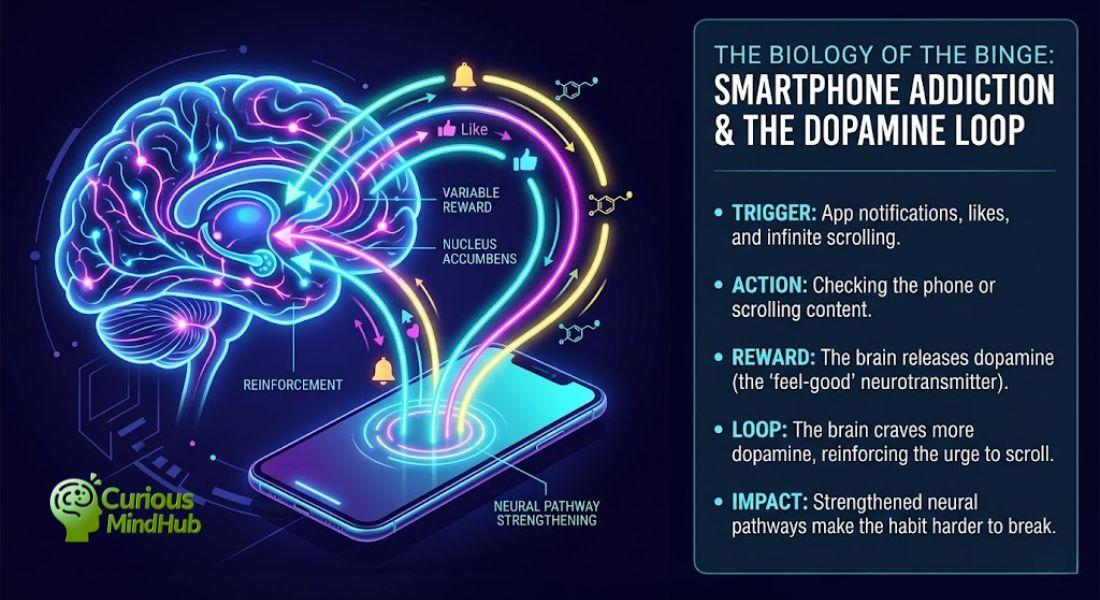
To build sustainable digital habits, it helps to understand why our screens are so deeply compelling. When we look at how dopamine loops affect the brain, we find a natural neurochemical system designed to encourage learning and exploration that modern technology uses very effectively. Dopamine is a chemical messenger associated with anticipation and motivation. It doesn't actually produce the feeling of pleasure itself; instead, it creates the driving urge to seek out a potential reward.
┌──────────────────────────────────────┐
│   TRIGGER: A Brief Moment of Boredom │
└──────────────────┬───────────────────┘
                   │
                   ▼
┌──────────────────────────────────────┐
│  ACTION: Open App & Start Scrolling  │
└──────────────────┬───────────────────┘
                   │
                   ▼
┌──────────────────────────────────────┐
│ VARIABLE REWARD: A Captivating Post  │
└──────────────────┬───────────────────┘
                   │
                   ▼
┌──────────────────────────────────────┐
│  DOPAMINE SPIKE: Loop Is Reinforced  │
└──────────────────────────────────────┘
The neurobiology of infinite scrolling keeps this loop moving continuously. By removing natural stopping points—like the end of a page or the conclusion of a chapter—feeds ensure that your brain remains in a constant state of expectation, always wondering if the next swipe will deliver a hit of novelty.
The Unpredictable Pull of the Variable Reward Schedule
The reason a casual habit can easily transform into a persistent scrolling addiction comes down to a design framework known as a variable reward schedule in social media. This operates on the exact same psychological principle that makes slot machines so captivating in a casino.
If every single post you looked at online was incredibly interesting, your brain would eventually normalize the excitement and log off. If every single post was boring, you would close the app immediately. However, because the content is unpredictable—meaning you have to scroll past several uninteresting updates to find one genuinely funny video or meaningful notification—your mind stays primed for the next interaction. This erratic delivery system keeps you engaged far longer than you ever originally intended.
Understanding the Neuroscience of Habit
Many people talk about compulsive phone use through the lens of a social media addiction. While it is frequently discussed in casual conversation as a personal discipline issue, the neuroscience of habit shows us that our brains naturally build automated routines to save mental energy.
When you feel tired, lonely, or slightly under-stimulated, your brain remembers that pulling out your phone provides an immediate, effortless distraction. Over time, this action becomes completely automated, completely bypassing your conscious decision-making process. Common signs that this automated loop has taken hold include:
-
Reflexive Reaching: Finding your phone already open in your hand without a conscious memory of deciding to pick it up.
-
The "Just One More" Loop: Intending to quickly review a single notification and accidentally spending forty-five minutes browsing an endless feed.
-
Friction with Real-World Tasks: Feeling an internal restlessness when trying to sit through a movie, read a physical book, or focus on a long conversation without checking your screen.
Practical Strategies to Disrupt the Loop
Learning how to break a scrolling addiction doesn't require deleting all your accounts or completely abandoning modern technology. Instead, it is about shifting toward digital minimalism for mental health—structuring your digital environment so that your tools serve your specific goals rather than controlling your attention.
Here are a few sustainable methods to introduce healthy friction between the urge to check your phone and the action of scrolling:
1. Introduce Physical Distance
Our brains love convenience. If your phone is sitting directly next to your keyboard or on your nightstand, you will reach for it automatically. Try placing your phone across the room or inside a drawer while you are working or relaxing. The simple act of having to get out of your chair to check an alert gives your logical mind a moment to step in and question the impulse.
2. Outsmart the App Visuals
Modern user interfaces use highly vibrant, optimized colors to make icons and notifications look as enticing as possible. Changing your smartphone’s display settings to grayscale instantly removes this visual novelty, making your apps look dull and significantly lowering the reward your brain gets from looking at the screen.
3. Replace the Digital Cue
When you hit a difficult patch in your work or feel a wave of boredom, your hands automatically look for something to interact with. Keep an analog alternative on your desk—like a physical notebook, a stress ball, or a book of short essays. Swapping the phone for a tangible, screen-free object satisfies the physical urge to fidget while allowing your mind a true moment of rest.
Rewiring Your Brain for Better Focus
Stepping away from high-frequency digital media allows your focus to naturally settle and deepen. This process of rewiring your brain for better focus takes time and patience. When you first practice these new boundaries, you will likely experience a brief wave of restlessness or a subtle worry that you are missing out on an update.
Instead of treating this minor discomfort as a reason to log back in, view it as a normal and healthy recalibration process. Your brain is simply adjusting to a lower, more sustainable baseline of sensory input. Within a short period, this newly recovered mental space makes it much easier to enjoy deep work, maintain deep conversations, and complete daily tasks with a sense of calm clarity.
A Mindful Note on Digital Habits
Adopting mindful device habits, setting screen-time boundaries, and engaging in analog hobbies are excellent lifestyle choices designed to encourage daily focus, general productivity, and a balanced lifestyle. These practical strategies are intended to support general well-being and are not designed to diagnose, treat, or manage any specific medical or psychological conditions.
Conclusion
Taking back ownership of your daily attention is one of the most rewarding changes you can make in our highly connected world. Reducing the noise of endless feeds isn't about missing out; It is a conscious decision to invest your time in real-world relationships, personal goals, and peaceful moments of reflection. By bringing a few balanced ways to reduce social media screen time into your routine, you give your mind the quiet environment it needs to rest and innovate naturally. To explore further practical guides, mindful tools, and community insights on navigating digital culture with genuine intent, connect with the resources at Curious Mind Hub .
Frequently Asked Questions
Why does infinite scrolling feel so difficult to stop mid-feed?
Infinite scrolling eliminates what behavioral scientists call "stopping cues." Traditional media, like books or newspapers, have natural conclusions (the end of a page or a column) that force you to pause and decide what to do next. Infinite feeds remove these natural breaks entirely, keeping your mind in a state of continuous anticipation.
How do variable rewards shape our daily routines?
Because variable rewards are delivered unpredictably, they keep the brain's reward centers continuously guessing. This high level of anticipation quickly builds strong habits, creating an internal urge to check your phone repeatedly throughout the day just in case a new, interesting update has arrived.
Can reducing my screen time help rebuild my attention span?
Yes. Concentration functions very much like a muscle. When you practice sitting through brief moments of boredom or workspace transitions without reaching for a quick digital distraction, you strengthen your capacity for deep, sustained attention over time.
What is a simple way to start practicing digital minimalism?
A great way to start is by batching your notifications. Turn off non-essential alerts so that your phone only chimes when a real person is trying to reach you directly. Then, schedule specific times of the day to intentionally check your social media profiles, rather than letting alerts interrupt your day continuously.

 Turkish