
Web Design in the Age of AI: Human Creativity vs Automation
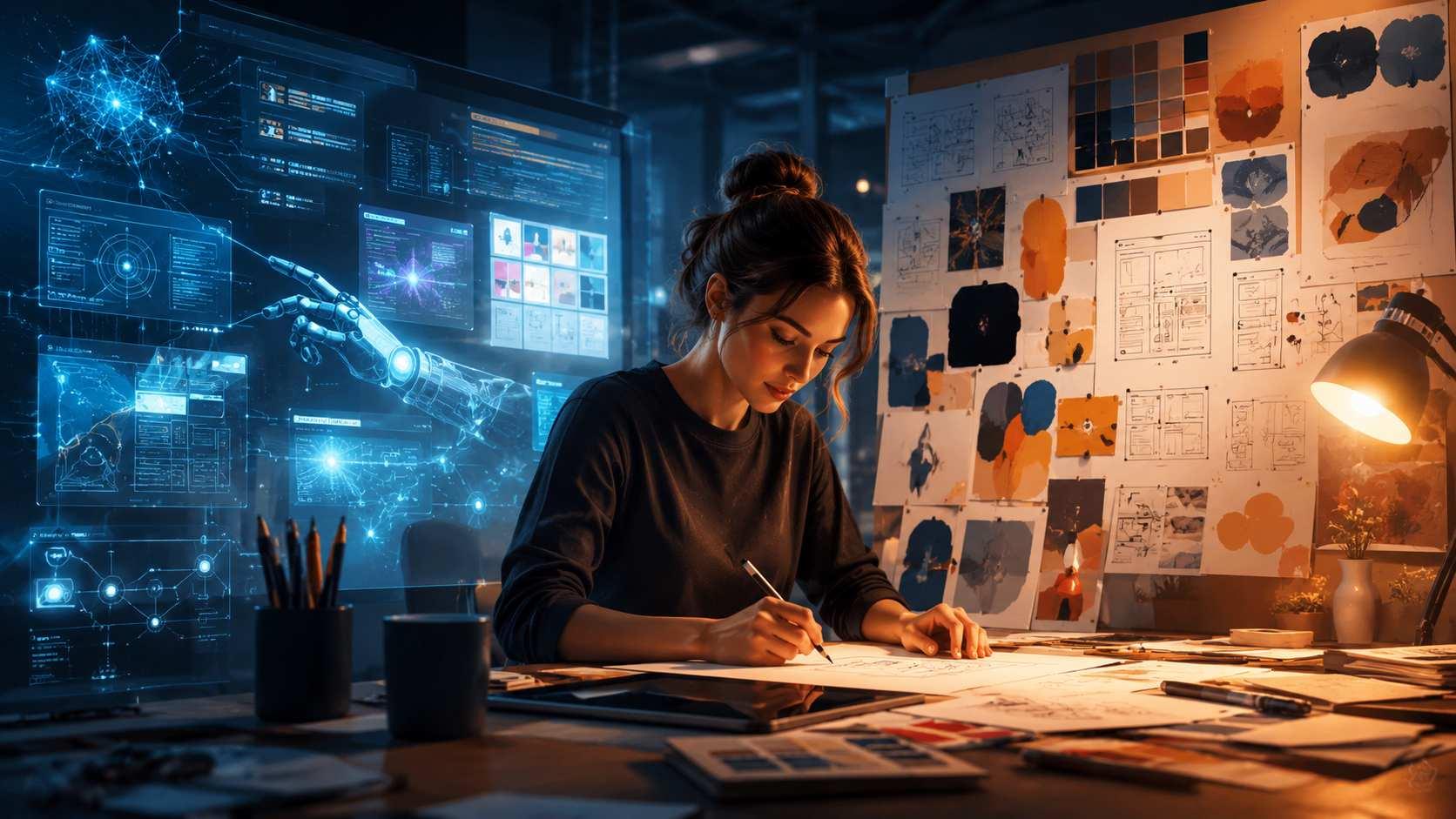
Artificial intelligence has changed the way websites are planned, designed, written, and optimized. Today, AI tools can generate layouts, suggest color palettes, write copy, create images, and even build complete landing pages in minutes. For businesses, this sounds like a dream: faster production, lower costs, and endless design variations.
But when it comes to meaningful web design, speed is not the same as strategy.
A website is not just a digital page. It is a brand experience, a sales tool, a trust-builder, and often the first serious interaction between a business and its audience. AI can assist the process, but human creativity gives web design its emotional intelligence, originality, and brand depth. In the age of automation, the strongest websites will not be the ones created only by machines — they will be the ones where human imagination uses AI as a tool, not as a replacement.
The Rise of AI in Web Design
AI has quickly become part of modern web design workflows. Designers now use AI for wireframe inspiration, content suggestions, image generation, user behavior analysis, A/B testing ideas, and repetitive production tasks. This has made the design process faster and more flexible.
For example, AI can analyze patterns from thousands of websites and suggest layouts that are likely to perform well. It can help identify usability issues, generate quick design concepts, and automate time-consuming tasks such as resizing images or producing multiple content variations.
This is useful — but it also has limits.
AI works by learning from existing patterns. That means it is excellent at remixing what already exists, but weaker at creating something deeply original, emotionally specific, or culturally relevant. A website built only around automation may look polished, but it can easily feel generic. And in competitive markets, generic design rarely builds lasting brand memory.
Why Human Creativity Still Matters More
Human creativity brings something AI cannot fully understand: context.
A skilled designer does not simply ask, “What layout looks good?” They ask deeper questions:
- What does this brand stand for?
- What emotion should the visitor feel?
- What problem is the user trying to solve?
- What visual language will make this business memorable?
- How can the design create trust, clarity, and action?
These questions require empathy, taste, storytelling, and business understanding. AI can support the answers, but it cannot genuinely feel the audience’s frustration, excitement, doubt, or desire.
This is especially important for businesses that need more than a template. A brand that wants to stand out needs intentional visuals, custom interaction patterns, persuasive content flow, and a design system that reflects its personality. That is where human-led design wins.
A professional UI UX Design Agency does not just decorate a website. It studies user behavior, business goals, conversion paths, accessibility, content hierarchy, and emotional appeal. AI may speed up parts of that process, but the strategic judgment still belongs to humans.
AI Is Efficient — But Efficiency Is Not Identity
One of the biggest advantages of AI is efficiency. It can produce quick concepts, generate multiple versions, and reduce manual workload. However, a brand’s website should not only be efficient; it should be distinctive.
If every business uses the same AI tools, trained on the same design patterns, the results can start to look similar. Rounded cards, gradient backgrounds, predictable hero sections, generic icons, and repetitive messaging can make brands blend into each other.
Human creativity breaks that pattern.
A creative designer can take a business’s story and translate it into a digital experience that feels unique. They can make subtle decisions about spacing, typography, animation, tone, and visual rhythm. These decisions may seem small, but together they shape how users perceive a brand.
That is why businesses still need Creative web design services that combine strategy, originality, and user-focused thinking. AI can help with speed, but creativity creates the difference.
Statistic Table: AI, UX, and Web Design Impact
| Area | Statistic | What It Means for Web Design |
|---|---|---|
| UX ROI | Every $1 invested in UX can return up to $100 | Strong UX is not just design work; it directly impacts business growth. |
| Bad User Experience | 88% of users are less likely to return after a poor experience | A visually attractive website still fails if the experience is frustrating. |
| Design First Impressions | Around 94% of first impressions are design-related | Visitors judge credibility quickly, so visual quality and clarity matter. |
| Conversion Impact | Good UX can increase conversion rates by up to 400% | Human-led UX strategy can turn design into measurable revenue. |
| AI in Design | 65% of respondents in a UX tools survey were already using AI in their work | AI is becoming a normal part of design workflows, but it works best as support. |
| Accessibility Issues | 95.9% of top home pages contain detectable accessibility errors | Human review is essential because automated design often misses real-world usability needs. |
Human Creativity vs Automation: The Real Difference
The debate should not be “AI or humans?” The better question is: “Who leads the creative direction?”
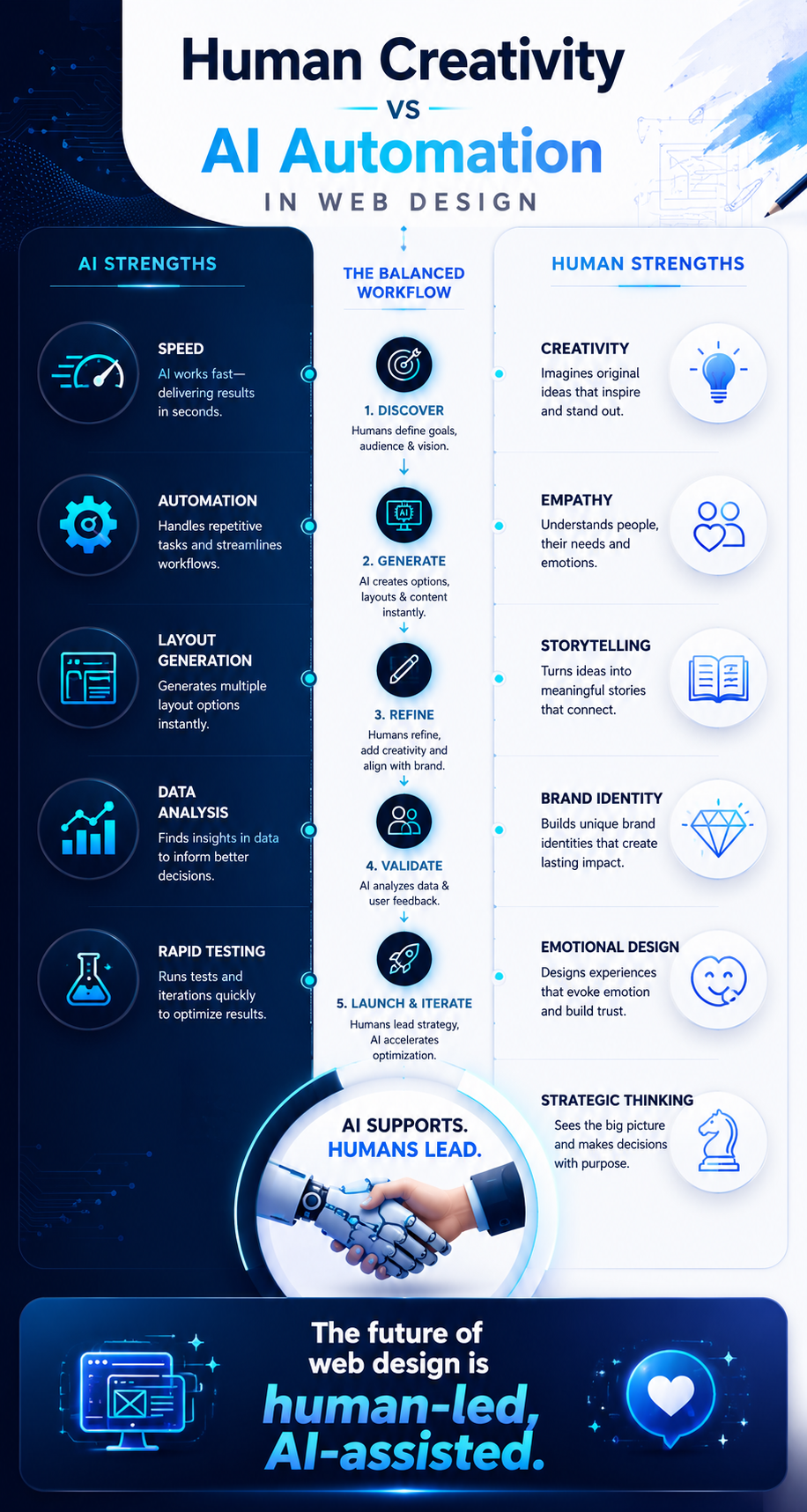
AI is powerful when used for:
- Fast idea generation
- Layout variations
- Content drafts
- Image concepts
- Data analysis
- Repetitive production tasks
- Testing and optimization suggestions
Humans are essential for:
- Brand storytelling
- Emotional design decisions
- User empathy
- Creative direction
- Cultural relevance
- Conversion strategy
- Ethical judgment
- Original visual identity
A fully automated website may be fast and affordable, but it often lacks the human layer that makes people trust, remember, and connect with a brand. In contrast, human-led web design can use AI as a creative assistant while keeping the final experience authentic and strategic.
The future belongs to designers who know how to collaborate with AI without surrendering creativity to it.
Why ZeeFrames Believes in Human-Led Web Design
ZeeFrames stands for creative, thoughtful, and human-centered digital experiences. In a world where many websites are starting to look automated and repetitive, ZeeFrames focuses on design that feels intentional, distinctive, and aligned with each brand’s identity. Instead of relying on generic templates or purely machine-generated visuals, ZeeFrames values the human side of web design — the storytelling, emotion, strategy, and creative judgment that make a website memorable. AI can support the workflow, but the heart of ZeeFrames’ niche is human creativity: building websites that do not just function well, but feel alive, authentic, and brand-specific.
The Risk of Over-Automated Web Design
Over-automation can create several problems:
1. Generic Brand Experience
AI-generated layouts often follow popular patterns. While these patterns may be usable, they may not communicate what makes a brand different.
2. Weak Emotional Connection
AI can imitate tone, but it does not truly understand emotional nuance. Human designers can shape experiences around trust, excitement, luxury, simplicity, or innovation.
3. Poor Strategic Alignment
A website should support business goals. That requires understanding the customer journey, sales funnel, and brand positioning — not just producing a beautiful interface.
4. Accessibility Gaps
Automated design tools can miss accessibility issues that affect real users. Human review helps ensure the website is usable for people with different needs.
5. Lack of Creative Risk
Great design often comes from bold, unexpected ideas. AI tends to produce safe outputs based on existing data, while humans can challenge conventions.
The Best Approach: Human Creativity Enhanced by AI
The smartest web design process is not anti-AI. It is human-first and AI-assisted.
AI should be used to save time, explore possibilities, and improve efficiency. But the concept, direction, emotional tone, and final decision-making should remain human-led.
A strong modern workflow may look like this:
- Human team defines brand strategy and user goals.
- AI assists with research, references, and rough concepts.
- Designers create original visual direction.
- UX experts refine structure, usability, and conversion paths.
- AI supports testing, optimization, and content variations.
- Humans finalize the experience for emotion, clarity, and brand uniqueness.
This combination gives businesses the best of both worlds: the speed of automation and the soul of human creativity.
Conclusion
AI is transforming web design, but it is not replacing the need for human creativity. It can generate ideas, speed up production, and support optimization, but it cannot fully understand emotion, culture, brand personality, or human behavior.
The most effective websites in the age of AI will be created by teams that know how to use automation wisely while protecting originality. Businesses do not need websites that simply look modern. They need websites that communicate, persuade, connect, and convert.
That is why human creativity remains the true advantage. AI can build faster, but humans build meaning.
FAQs
1. Will AI replace web designers?
No, AI will not fully replace web designers. It will automate repetitive tasks and support faster workflows, but human designers are still needed for creativity, strategy, empathy, branding, and user experience decisions.
2. How is AI used in web design?
AI is used for generating layouts, writing draft content, creating images, analyzing user behavior, suggesting improvements, automating testing, and producing design variations.
3. Why is human creativity important in web design?
Human creativity helps create websites that feel original, emotional, and brand-specific. It allows designers to understand audience needs, business goals, and visual storytelling in a way automation cannot fully replicate.
4. Should businesses use AI for web design?
Yes, businesses can use AI as a helpful tool, but they should avoid relying on it completely. The best results come from combining AI efficiency with professional human design direction.
5. What makes human-led web design better for brands?
Human-led web design creates stronger brand identity, better emotional connection, more thoughtful user journeys, and more original digital experiences. This is especially important for businesses that want to stand out rather than look like everyone else.


 English