
Optical Window Glass Issues Ruining Device Accuracy Today
Precision optical systems depend heavily on material quality. In industries such as aerospace, medical imaging, defense, industrial automation, and laser technology, even a small optical defect can affect the entire system performance. One of the most common causes of reduced efficiency is poor-quality optical window glass.
Many businesses experience problems like distorted imaging, low transmission efficiency, coating failure, thermal instability, and environmental damage because of weak optical materials. These issues increase maintenance costs, reduce equipment lifespan, and affect operational accuracy.
To avoid these challenges, manufacturers are now focusing on advanced optical window glass solutions that deliver higher precision, better durability, and stable optical performance. As modern optical systems become more advanced, selecting the right optical window glass is becoming increasingly important for long-term reliability and performance.
What Is Optical Window Glass?
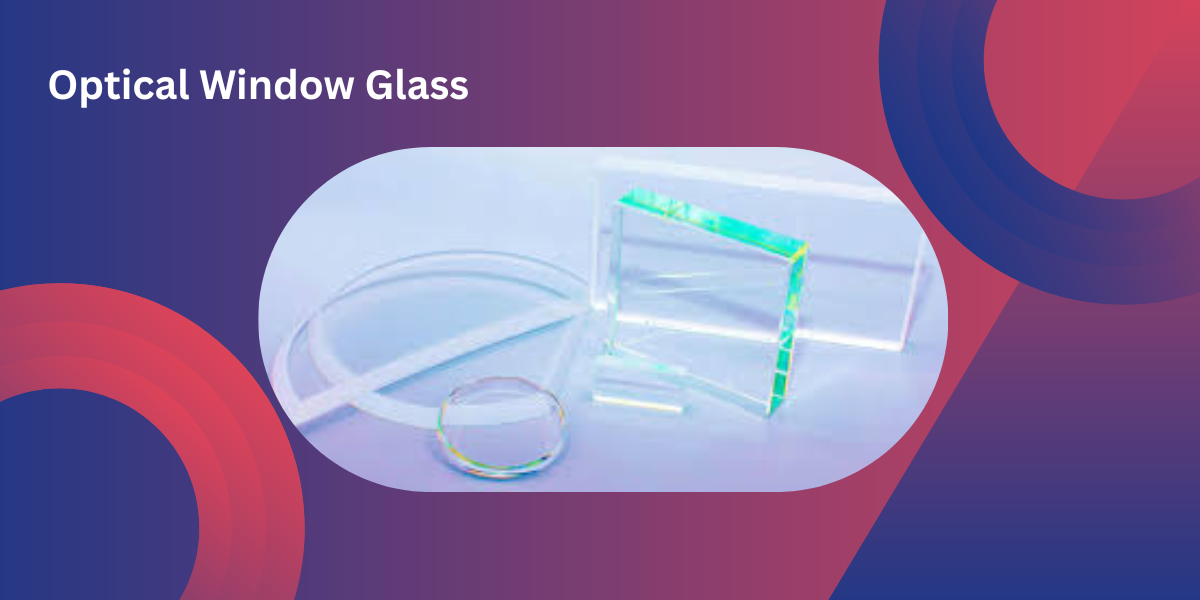
Optical window glass is a transparent optical component designed to protect sensitive internal systems while allowing light to pass through with minimal distortion. Unlike regular glass, optical window glass is manufactured using highly controlled processes to achieve precise optical clarity and transmission performance.
These optical windows are used in applications where image quality, sensor accuracy, and environmental protection are critical.
Common applications include:
- Infrared imaging systems
- Laser equipment
- Medical optical devices
- Aerospace sensors
- Surveillance systems
- Industrial cameras
The main purpose of optical window glass is to maintain optical accuracy while protecting internal components from dust, pressure, moisture, and environmental damage.
Common Problems Caused by Low-Quality Optical Window Glass
Many businesses face operational and technical issues because of poor optical material selection.
Reduced Light Transmission
Low-quality glass materials may block or scatter light, reducing system efficiency and imaging performance.
Surface Damage and Scratches
Weak surfaces can become scratched during cleaning or industrial use, affecting optical clarity.
Thermal Expansion Problems
Some materials cannot maintain stability under changing temperatures, leading to distortion and reduced precision.
Reflection and Glare
Improper coatings increase unwanted reflections, reducing image quality and sensor performance.
Environmental Exposure Risks
Optical systems exposed to moisture, chemicals, or dust require reliable protective windows to prevent internal damage.
How Optical Window Glass Solves These Challenges
Modern optical window glass is engineered to support demanding industrial and scientific environments.
High Optical Clarity
Precision manufacturing reduces distortion and improves image sharpness across optical systems.
Better Transmission Efficiency
Advanced optical materials allow more light to pass through with minimal signal loss.
Strong Surface Durability
Protective coatings improve scratch resistance and extend operational lifespan.
Thermal Stability
High-quality optical windows maintain dimensional accuracy under extreme temperature conditions.
Improved Coating Technology
Anti-reflective coatings help reduce glare and improve imaging performance.
Industries Using Optical Window Glass
The demand for optical window glass continues growing because industries increasingly depend on advanced imaging and sensing technologies.
Aerospace and Aviation
Aircraft and satellite systems require durable optical materials capable of handling pressure and environmental changes.
Medical Imaging Industry
Diagnostic and surgical imaging systems rely on accurate light transmission and stable optical performance.
Defense and Security Systems
Military optics and surveillance devices require reliable optical protection in harsh environments.
Laser and Photonics Industry
Laser systems need optical windows that support beam quality and thermal resistance.
Industrial Automation
Machine vision systems and industrial sensors use optical windows for environmental protection and precision imaging.
Important Factors Businesses Should Evaluate
Choosing the right optical window glass requires careful technical evaluation.
Optical Material Selection
Different materials support different wavelength ranges and environmental requirements. Common options include fused silica, sapphire, and borosilicate glass.
Coating Performance
Anti-reflective coatings improve transmission efficiency while reducing glare.
Surface Quality
Precision polishing helps maintain image clarity and system accuracy.
Environmental Resistance
The optical window should resist moisture, chemicals, dust, and pressure variations.
Dimensional Precision
Accurate thickness and surface flatness help maintain stable optical alignment.
Challenges Businesses Still Face
Although optical window glass technology offers major advantages, some challenges remain during production and integration.
High Manufacturing Costs
Precision optical materials and coating technologies can increase production expenses.
Complex Customization Requirements
Some industries require specialized coatings, shapes, or wavelength compatibility for unique applications.
Supplier Quality Inconsistency
Not every supplier provides stable manufacturing quality or long-term technical support.
Best Strategy for Long-Term Optical Performance
Businesses should avoid selecting optical window glass based only on low cost. Poor optical materials can reduce system reliability and increase maintenance risks.
The best solution is to work with experienced optical manufacturers that provide:
- Precision optical engineering
- Certified material quality
- Advanced coating technology
- Stable production standards
- Technical consultation and support
This approach helps businesses improve product reliability while reducing operational failures and replacement costs.
Future of Optical Window Glass Technology
The future of optical window glass technology is focused on stronger materials, smarter coatings, and higher transmission performance. Industries are demanding optical solutions capable of supporting AI-driven imaging, advanced sensors, and compact optical systems.
Future developments may include:
- Better infrared transmission
- Improved anti-scratch coatings
- Enhanced thermal resistance
- Higher optical precision
- More efficient manufacturing methods
These innovations will continue supporting next-generation scientific, industrial, and defense technologies.
Conclusion
Low-quality optical window glass can reduce system accuracy, damage sensitive components, and increase maintenance costs. Advanced optical window glass solutions solve these problems through better transmission efficiency, thermal stability, durability, and environmental protection.
For businesses working in aerospace, medical imaging, industrial automation, laser systems, and defense technology, selecting high-quality optical window glass is essential for long-term operational success. As optical systems continue becoming more advanced, reliable optical window glass will remain a critical component in precision engineering and high-performance imaging applications.

 Turkish