Falling behind on your tax return is more common than most self-employed Australians think. Whether you're a freelancer, contractor, sole trader, or small business owner, juggling income, expenses, and compliance can get overwhelming and deadlines can slip.
The good news? A late tax return isn't the end of the world, but ignoring it can quickly turn into a costly problem. This guide explains what happens when you miss your tax deadline, the penalties involved, and how to fix overdue tax returns efficiently in Australia.
Understanding Late Tax Returns in Australia
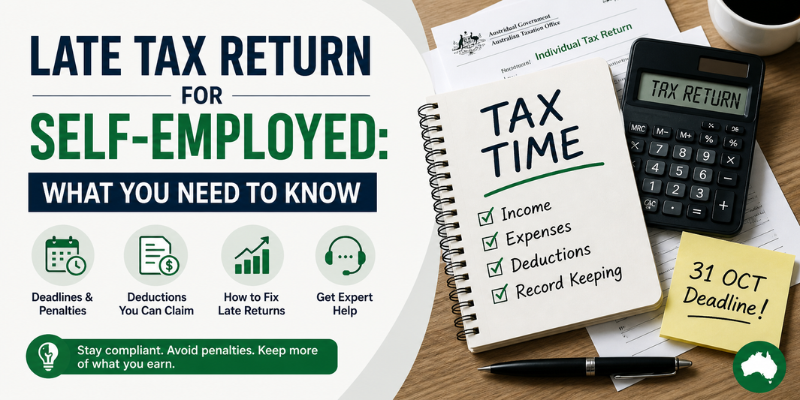
In Australia, self-employed individuals must lodge their tax returns annually with the Australian Taxation Office . If you're lodging your own return, the deadline is usually 31 October following the end of the financial year (30 June).
If you miss this deadline, your return is officially considered a Late tax Return .
However, if you work with a tax professional, you may receive extended deadlines provided you're registered with them before the cutoff.
Why Self-Employed Individuals Fall Behind
Unlike salaried employees, self-employed taxpayers handle everything themselves. Some common reasons for late lodgement include:
- Poor record-keeping of income and expenses
- Cash flow issues leading to avoidance
- Confusion about deductions and compliance
- Multiple income streams complicating reporting
- Underestimating tax obligations
Many sole traders also delay filing because they fear owing money, which only makes the situation worse.
Penalties for Late Tax Returns
The ATO imposes penalties if you fail to lodge your tax return on time. These are known as Failure to Lodge (FTL) penalties.
1. Failure to Lodge Penalty
- Calculated in penalty units (which increase periodically)
- Applied for every 28 days your return is overdue
- Capped after a certain period
2. Interest Charges
If you owe tax, the ATO may apply:
- General Interest Charge (GIC) on unpaid amounts
- Daily compounding interest
3. Estimated Assessments
If you delay too long, the ATO may issue an estimated tax bill, often higher than what you actually owe.
Can You Still Lodge an Overdue Tax Return?
Yes you can lodge late returns, even if they are several years overdue.
In fact, the ATO encourages voluntary compliance. Filing late is always better than not filing at all.
Key points:
- You can lodge multiple years of returns
- You may still be eligible for refunds
- Earlier action can reduce penalties
How Far Back Can You Lodge Tax Returns?
Generally, you can lodge returns for previous financial years, even if you've missed several.
However:
- Refund claims may have time limits
- The ATO may scrutinise older returns more closely
- Missing multiple years increases compliance risk
If you have several overdue returns, it's best to address them all together rather than one at a time.
Steps to Fix a Late Tax Return
Here's a practical step-by-step approach for self-employed individuals:
1. Gather Financial Records
Collect all relevant documents:
- Invoices and income records
- Bank statements
- Expense receipts
- Business-related deductions
If records are incomplete, you may need to reconstruct them using bank data.
2. Identify Deductions
Self-employed individuals can claim:
- Home office expenses
- Vehicle and travel costs
- Equipment and tools
- Internet and phone usage
Claiming correctly can significantly reduce your tax liability.
3. Lodge Your Return ASAP
You can lodge:
- Online via myGov
- Through accounting software
- With help from a professional
The sooner you lodge, the lower your penalties and stress.
4. Pay or Arrange a Payment Plan
If you owe tax:
- Pay in full if possible
- Or request a payment plan with the ATO
The ATO is generally flexible if you communicate early.
5. Request Penalty Remission (If Applicable)
In some cases, penalties may be reduced or removed if:
- You have a valid reason (illness, hardship, etc.)
- You voluntarily come forward
- You have a good compliance history
Benefits of Fixing Late Returns Early
Many self-employed individuals delay action, but acting early has clear advantages:
- Lower penalties and interest
- Reduced risk of audits
- Access to refunds (if applicable)
- Improved financial clarity
- Peace of mind
Ignoring the problem, on the other hand, can lead to escalating debt and legal complications.
Common Mistakes to Avoid
When dealing with overdue tax returns, watch out for these errors:
- Ignoring ATO notices
- Filing incomplete or incorrect information
- Overclaiming deductions without proof
- Waiting for the “perfect time” to lodge
- Not seeking professional help when needed
Even a small mistake can trigger delays or audits.
Special Considerations for Self-Employed Taxpayers
- GST Obligations: If you're registered for GST, you must also ensure your Business Activity Statements (BAS) are up to date.
- PAYG Installations: You may need to pay tax in installations throughout the year, not just annually.
- Cash vs Accrual Accounting: Make sure you're reporting income correctly based on your accounting method.
When to Seek Professional Help
If your situation involves:
- Multiple overdue years
- Large tax debts
- Missing financial records
- Complex business income
…it's wise to consult a registered tax agent .
A professional can:
- Ensure accurate lodging.
- Maximise deductions
- Negotiate with the ATO
- Help reduce penalties
They also often have access to extended lodgement deadlines, which can be a major advantage.
Can You Avoid Penalties Completely?
In some cases, yes but it depends on your situation.
You may qualify for relief if:
- You voluntarily disclose before ATO action
- You have a reasonable excuse
- You act quickly to fix the issue
However, there are no guarantees. The ATO assesses each case individually.
Practical Tips to Stay Compliant Going Forward
Once you've caught up, it's important to stay on track:
- Use accounting software to track income and expenses
- Set reminders for tax deadlines
- Keep digital copies of receipts
- Separate business and personal finances
- Work with a tax professional year-round
Consistency is the key to avoiding future delays.
Final Thoughts
A late tax return can feel stressful, especially when you're self-employed and managing everything yourself. But the reality is simple: the longer you wait, the worse it gets.
The Australian tax system is designed to encourage compliance, not punish honest mistakes. If you take action early, stay transparent, and seek help when needed, you can resolve overdue tax returns with minimal impact.
If you're behind, don't overthink it start today, get organized, and take the first step toward getting back on track.


 English