In modern manufacturing, joining metal sheets efficiently, accurately, and at scale is critical for productivity and product reliability. A spot resistance welder plays a central role in this ecosystem, especially in high-volume industries like automotive, appliance manufacturing, electronics, and structural metal fabrication.
At Heron Welder, advanced resistance welding systems are designed to meet the growing demand for precision, automation readiness, and energy efficiency in industrial production lines.
What is a Spot Resistance Welder?
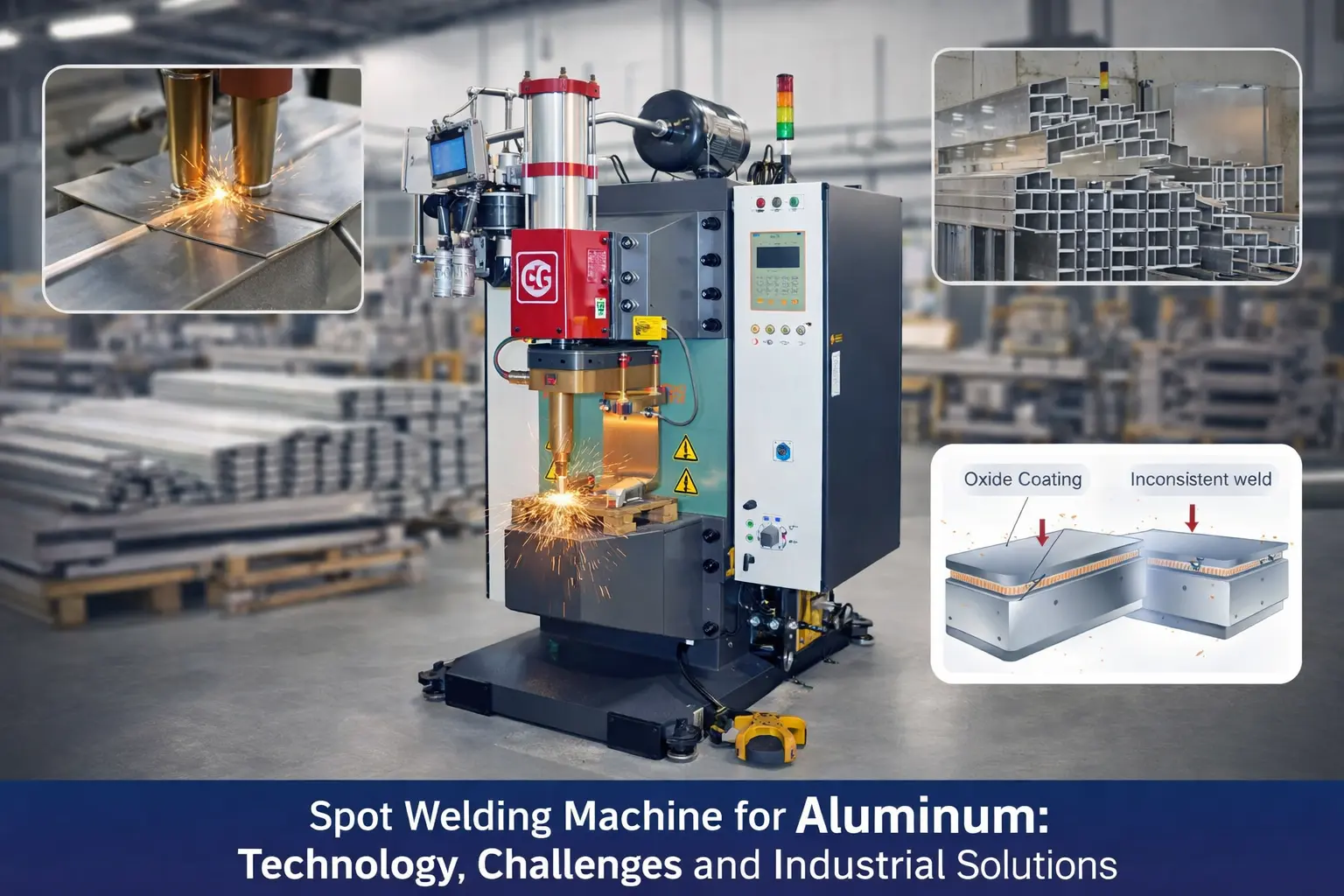
A spot resistance welder is a type of resistance welding machine that joins two or more overlapping metal sheets by applying pressure and high electrical current at localized points (spots).
The principle is based on Joule heating, where electrical resistance at the interface of metal sheets generates intense heat. This heat melts a small area (called the weld nugget), which solidifies under pressure to form a strong metallurgical bond.
In simple industrial terms:
Heat + Pressure + Time = Strong Spot Weld
This method is widely used because it eliminates the need for filler materials, produces clean joints, and supports fast automation in production environments.
Working Principle of Spot Resistance Welding
The operation of a spot resistance welder follows a controlled sequence:
1. Electrode Clamping
Copper alloy electrodes press two metal sheets together with controlled force.
2. Current Application
A high electrical current (often thousands of amperes) passes through the workpiece.
3. Heat Generation
Resistance at the contact interface generates heat, forming a molten zone.
4. Nugget Formation
The molten metal fuses at a single spot, forming a weld nugget.
5. Cooling Under Pressure
Current stops, but pressure remains until the joint solidifies.
This entire cycle happens in milliseconds, making it ideal for high-speed manufacturing environments.
Key Industrial Applications
Spot resistance welding is not limited to one industry it is a backbone process in multiple sectors:
Automotive Manufacturing
- Car body panels
- Door frames
- Chassis components
Automotive plants may use thousands of spot welds per vehicle body for structural integrity.
Appliance Production
- Washing machines
- Refrigerators
- Air conditioner panels
Electrical & Battery Manufacturing
- Battery tabs (Li-ion packs)
- Electrical enclosures
- Busbars
Industrial Fabrication
- Sheet metal assemblies
- HVAC ducting systems
- Metal furniture frames
Its ability to be fully automated makes it a standard choice for OEM production lines.
Types of Spot Resistance Welding Systems
Modern manufacturing uses several variants of spot resistance welding technologies:
1. AC Spot Welding
- Traditional system
- Suitable for basic sheet metal work
2. MFDC Spot Welding
- Medium Frequency Direct Current
- Higher precision and energy efficiency
- Ideal for advanced automotive and aluminum welding
3. Capacitor Discharge Welding
- Extremely fast energy release
- Used for small or delicate components
At Heron Welder, MFDC-based systems are widely used due to their stable current control, reduced spatter, and improved weld consistency.
Advantages of Spot Resistance Welding
Spot resistance welding remains dominant in industrial production due to several advantages:
✔ High Speed Production
Weld cycles are extremely fast, ideal for mass manufacturing.
✔ Automation-Friendly
Easily integrated with robotic arms and production lines.
✔ No Filler Material Required
Reduces operational cost and material handling complexity.
✔ Clean and Precise Welds
Minimal distortion and controlled heat-affected zone.
✔ Cost Efficiency
Low consumable usage and reduced post-processing needs.
✔ Strong Mechanical Bonds
Produces durable joints suitable for structural applications.
Key Parameters That Control Weld Quality
For engineers and production managers, controlling welding parameters is essential:
- Welding current (heat generation)
- Electrode force (pressure stability)
- Weld time (energy duration)
- Electrode condition (wear and conductivity)
Even small variations can impact nugget size, strength, and consistency. That is why modern systems emphasize digital control and real-time monitoring.
Common Challenges in Spot Resistance Welding
Despite its advantages, manufacturers may face:
- Electrode wear over time
- Inconsistent nugget formation
- High conductivity metals (like aluminum) requiring higher current
- Heat imbalance in multi-layer sheets
Advanced MFDC systems and intelligent controllers help overcome these issues by stabilizing current output and improving process repeatability.
Why Heron Spot Resistance Welding Systems Stand Out
Heron Welder specializes in industrial-grade resistance welding solutions, including spot, projection, seam welding, clinching, and automated production systems.
Key engineering strengths include:
- High-power MFDC technology
- Precision current and force control
- Integration-ready automation systems
- Robust designs for continuous production
- Custom solutions for OEM manufacturing lines
For industries requiring consistent weld quality at scale, these systems provide a strong balance between performance, efficiency, and long-term reliability.
Best Practices for Industrial Spot Welding
To achieve optimal performance:
- Maintain clean electrode surfaces
- Ensure proper alignment of workpieces
- Regularly calibrate welding current settings
- Replace worn electrodes promptly
- Use cooling systems for high-duty cycles
Following these practices significantly improves weld consistency and reduces production downtime.
FAQs
1. What materials can a spot resistance welder join?
It can join steel, stainless steel, aluminum, copper alloys, and thin sheet metals commonly used in industrial manufacturing.
2. Is spot welding stronger than traditional welding?
For sheet metal applications, spot welds provide excellent strength, especially when multiple weld points are used in structural assemblies.
3. Can spot resistance welding be automated?
Yes, it is one of the most automation-friendly welding processes and is widely used in robotic production lines.
4. What industries rely most on spot welding?
Automotive, electronics, appliance manufacturing, battery production, and HVAC industries.
5. How does MFDC improve spot welding performance?
MFDC provides more stable current control, higher efficiency, reduced spatter, and improved weld consistency compared to traditional AC systems.
Final Thoughts
A spot resistance welder is more than just a joining tool it is a core enabler of modern industrial production. From automotive body assembly to precision electronic components, it ensures speed, strength, and scalability in manufacturing.
As industries move toward automation and higher quality standards, advanced resistance welding systems are becoming essential for maintaining competitiveness.
Request a Custom Solution from Heron Welder
Heron Welder delivers high-performance spot resistance welding machines, MFDC systems, and fully automated welding solutions tailored for industrial production needs.
If you are looking to improve weld quality, increase production efficiency, or upgrade your welding automation system, our engineering team can help design a solution for your factory.
Contact Heron Welder today to request a quote or technical consultation for your customized spot resistance welding solution.


 Turkish