
Clear Aligners for Teenagers: Invisalign vs Braces, What Actually Works Better?
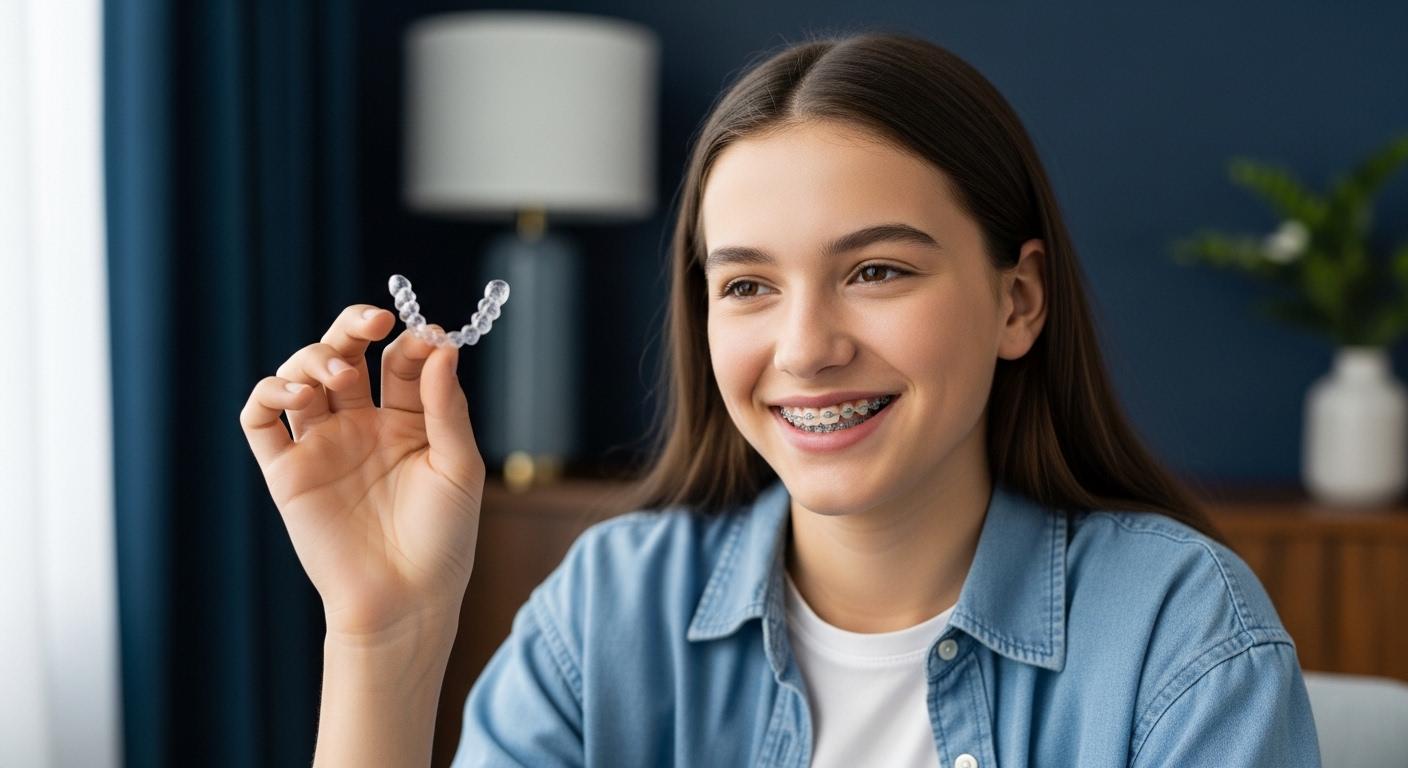
If you're choosing between clear aligners for teenagers and braces, here’s the simple answer: both work—but the right choice depends on your teen’s habits, lifestyle, and dental needs. Clear aligners like Invisalign Teen are more comfortable and discreet, while braces are often more reliable for complex cases.
Orthodontic treatment during teenage years is common—around 50–70% of teens worldwide need some form of teeth straightening. So yeah, if you're dealing with this decision, you're definitely not alone. Let’s break it down clearly so you can choose with confidence.
What Are Clear Aligners for Teenagers and How Do They Work?
Clear aligners for teenagers are removable, transparent trays that gradually move teeth into position. They’re custom-made and changed every 1–2 weeks as teeth shift.
Unlike braces, there are no wires or brackets. Instead, your teen wears a series of trays designed using digital scans. Each tray applies gentle pressure to guide teeth into alignment.
Teens love aligners because they’re nearly invisible. But there’s a catch: they only work if worn 20–22 hours a day. Skip that, and the results slow down. Simple as that.
So, How Do Traditional Braces Actually Work?
Braces use brackets and wires fixed to the teeth to move them over time. They apply continuous pressure, which makes them very effective—especially for complex cases.
There are different types, like metal braces and ceramic braces. The system is adjusted every 4–6 weeks by an orthodontist to keep teeth moving correctly.
If you’re still unsure which option is right, getting a professional opinion makes all the difference. At Smiley Faces Dental, we usually start with a simple evaluation to understand your teen’s bite, alignment, and habits before suggesting a plan. Sometimes, aligners are perfect. Other times, braces are the smarter long-term solution.
Invisalign Teen vs Braces: What’s the Real Difference?
The main difference is control vs convenience. Braces offer more control for the orthodontist, while aligners offer more convenience for the teen.
Let’s compare them clearly:
|
Feature |
Invisalign Teen (Clear Aligners) |
Traditional Braces |
|
Visibility |
Nearly invisible |
Visible (metal or ceramic) |
|
Comfort |
Smooth, less irritation |
Can cause soreness, wire pokes |
|
Removability |
Removable |
Fixed |
|
Eating Restrictions |
None |
Avoid hard/sticky foods |
|
Oral Hygiene |
Easy (remove to brush) |
More difficult |
|
Discipline Needed |
High |
Low |
|
Best For |
Mild to moderate cases |
Mild to severe cases |
|
Appointments |
Fewer visits |
Regular adjustments |
Honestly, this table clears up most confusion. It’s not about which is “better”—it’s about what fits your teen.
Which Option Is More Comfortable for Teens?
Clear aligners are generally more comfortable than braces. They don’t have sharp edges or wires that can irritate the cheeks and gums.
Braces can cause soreness after adjustments. Also, broken brackets or poking wires? Yeah, that happens more than you’d think.
But aligners aren’t perfect either. Some teens feel pressure when switching trays. Still, most describe it as mild and manageable.
Are Clear Aligners as Effective as Braces?
Yes—for mild to moderate cases. But for complex problems, braces are still more effective.
Aligners work great for spacing, minor crowding, and simple bite issues. But severe misalignment, rotated teeth, or jaw corrections often need braces.
Here’s where many parents get confused. They assume aligners can fix everything. They can’t. That’s why a proper evaluation matters.
Which Option Is Better for Busy Teen Lifestyles?
Clear aligners fit better into active, social teen lifestyles. They’re removable, so teens can eat normally, play sports comfortably, and smile confidently in photos.
There’s also no “metal smile” concern. That matters more to teens than adults sometimes realize.
But—and this is important—aligners can be lost or forgotten. It happens. A lot. Especially during school or travel.
Braces don’t have that problem. They stay put, no matter what.
What Do Dentists Usually Recommend?
Dentists recommend based on the case, not trends.
If your teen has mild alignment issues and is responsible, aligners are a great option. If the case is complex or compliance is doubtful, braces are often the safer choice.
Things patients always get wrong about this—they think the “latest” option is automatically the best. It’s not. The best option is the one that actually works for your teen.
How Do You Choose the Right Option for Your Teen?
The right choice depends on three things: dental condition, lifestyle, and responsibility level.
Some teens are disciplined. They’ll wear aligners exactly as instructed. Others? Not so much—and that’s okay, but it changes the plan.
A real-life moment we see often: a teen starts with aligners, forgets to wear them, and ends up switching to braces later. That’s time and money lost.
So yeah—honest assessment matters more than preference.
FAQ: Invisalign Teen vs Braces
1. Is Invisalign Teen faster than braces?
Not necessarily. Treatment time depends on the case. Both can take 12–24 months on average.
2. Can teens switch from braces to aligners?
Yes, in some cases. But it depends on treatment progress and goals.
3. Do aligners hurt less than braces?
Generally, yes. Aligners cause less irritation but still create mild pressure.
4. Are braces better for severe cases?
Yes. Braces are more effective for complex alignment and bite problems.
5. What happens if my teen loses aligners?
They’ll need replacements, which can delay treatment and increase cost.
6. Can aligners fix overbite or underbite?
Mild cases, yes. Severe ones usually need braces or additional treatment.
Final Thoughts: It’s Not About Trend—It’s About Fit
Choosing between clear aligners for teenagers and braces isn’t about what’s popular. It’s about what actually works for your teen.
If your teen is responsible and wants a discreet option, aligners can be amazing. If the case is complex or consistency is a concern, braces are still the gold standard.
Either way, the goal is the same—a healthy, confident smile that lasts.

 Turkish