
What Is an Automated Calling System and How Does It Work for Modern Businesses?
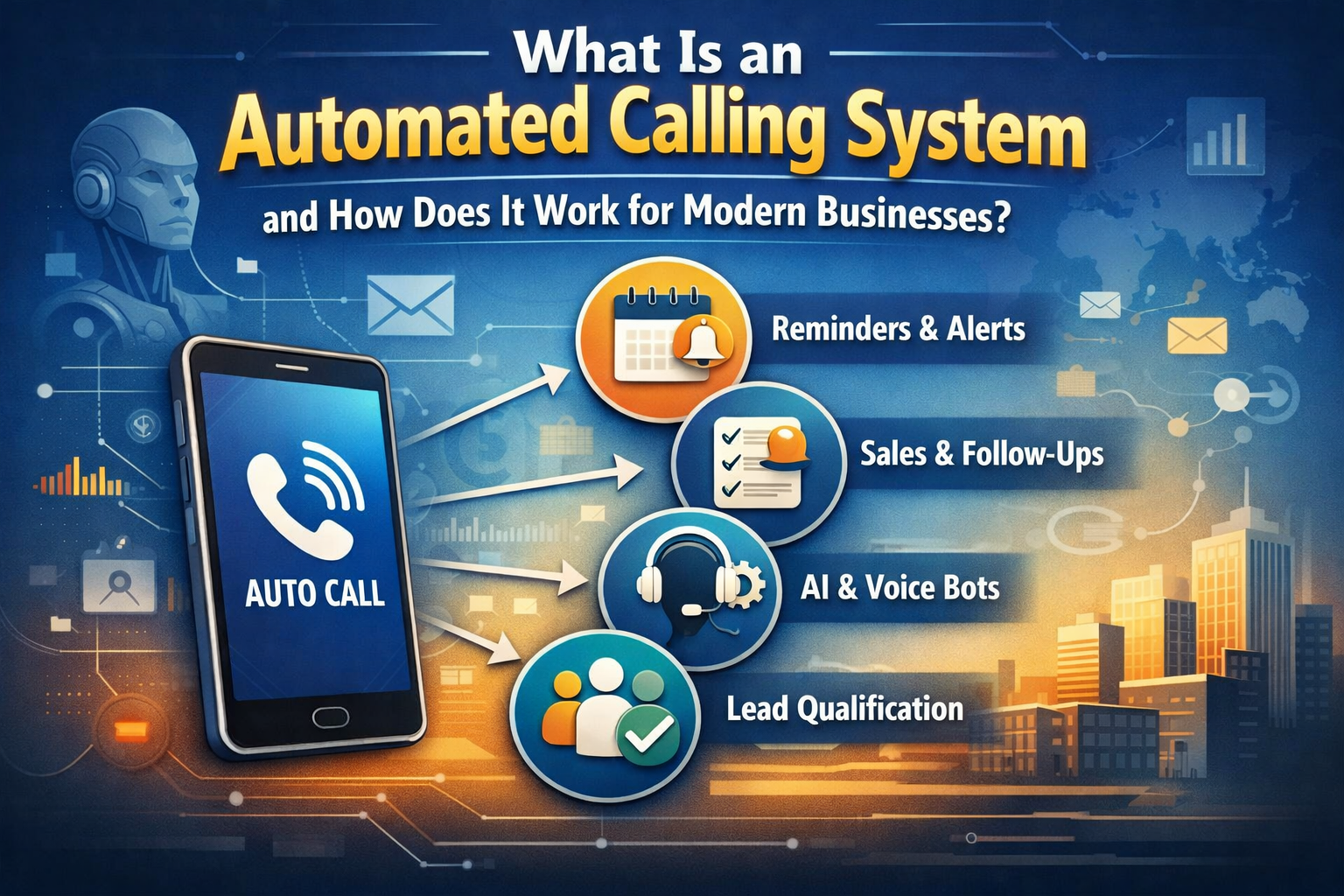
In today’s fast-moving business world, speed, consistency, and customer engagement matter more than ever. Companies can no longer rely only on manual calling processes to connect with leads, customers, and existing clients at scale. This is where an automated calling system becomes a game-changer.
Whether it is used for sales outreach, appointment reminders, payment follow-ups, customer support, or lead qualification, an automated phone calling system helps businesses save time, reduce human effort, and improve communication efficiency.
In this blog, we will explain what an automated calling system is, how it works, its key features, benefits, and why it has become essential for modern businesses.
What Is an Automated Calling System?
An automated calling system is a technology solution that automatically places outbound calls or manages inbound call interactions without requiring a human agent to manually dial each number.
It can deliver pre-recorded messages, connect customers to live agents, gather responses through voice menus, and even use AI-powered voice agents to handle conversations in a more natural way.
In simple words, automated call systems help businesses streamline large-scale phone communication. Instead of having a team spend hours making repetitive calls, the system can handle these tasks automatically and consistently.
Businesses use automated phone calling for many purposes, including:
-
Appointment reminders
-
Payment due notifications
-
Event updates
-
Customer feedback collection
-
Lead qualification
-
Promotional campaigns
-
Emergency alerts
-
Survey calls
As customer expectations rise, more companies are adopting automated call systems to improve response times and deliver a more reliable customer experience.
How Does an Automated Phone Calling System Work?
An automated phone calling system works by combining call automation software, contact databases, telephony technology, and workflow logic.
Here is a simple step-by-step breakdown of how it works:
1. Contact Data Is Uploaded
The business first uploads a contact list into the system. This may include customer names, phone numbers, appointment times, order details, or campaign-related information.
2. A Call Campaign Is Created
The company sets up a campaign based on its goal. For example, it may want to remind customers about appointments, promote a service, or follow up on leads.
3. Message or Call Flow Is Configured
The business either records a voice message or creates a call script. In more advanced systems, AI voice agents can speak dynamically based on user responses.
4. Calls Are Triggered Automatically
The system starts dialing numbers automatically according to the campaign settings. Calls may be made instantly, at scheduled times, or based on customer actions.
5. Recipients Interact With the Call
When the call connects, the recipient hears the message or interacts with the system. Some automated call systems allow users to press keypad options such as:
-
Press 1 to confirm an appointment
-
Press 2 to speak with an agent
-
Press 3 to repeat the message
More advanced systems can also understand spoken responses.
6. Actions Are Recorded and Routed
The system logs the outcome of each call. If needed, it can route the recipient to a sales rep, support team, or another department.
7. Reports and Analytics Are Generated
After the campaign, the platform shows data such as call answer rates, response rates, call duration, conversions, and customer actions.
This process makes automated phone calling much faster and more scalable than manual calling.
Key Features of Automated Call Systems
Modern automated call systems offer much more than simple robocalls. Today’s platforms include smart business communication features designed to support both sales and customer service teams.
Bulk Outbound Calling
A system can place calls to hundreds or thousands of contacts in a short time, making it ideal for large campaigns.
Scheduled Call Automation
Businesses can set calls to go out at the best time for customer engagement, improving answer rates.
Interactive Voice Response (IVR)
IVR allows customers to respond through keypad inputs or voice commands, helping automate common tasks.
Call Routing
Calls can be automatically transferred to the correct department or live representative.
CRM Integration
Many systems connect with CRM tools so teams can sync contact records, call results, and lead updates.
Analytics and Reporting
Detailed call performance insights help businesses optimize campaigns and improve communication strategies.
AI Voice Capabilities
Some advanced automated phone calling system platforms now use AI voices that sound natural and can handle simple two-way conversations.
Benefits of Automated Phone Calling for Modern Businesses
Using an automated calling system offers significant advantages for businesses of all sizes.
1. Saves Time
Manual dialing takes a lot of time, especially for repetitive outreach tasks. Automation handles this instantly and efficiently.
2. Reduces Operational Costs
By reducing the need for agents to make every routine call manually, businesses can lower staffing costs and improve productivity.
3. Improves Consistency
An automated phone calling system ensures every contact receives the same message accurately, which reduces errors.
4. Increases Outreach Capacity
Teams can reach more customers, leads, or patients in less time without expanding headcount.
5. Enhances Customer Experience
Timely reminders, updates, and support options help customers feel informed and valued.
6. Boosts Lead Qualification
Sales teams can use automated phone calling to pre-qualify leads before a human rep joins the conversation.
7. Supports 24/7 Availability
Some systems can manage calls after business hours, ensuring customers can still interact with the business.
Common Business Use Cases for Automated Call Systems
An automated calling system can be used across many industries and business functions.
Healthcare
Hospitals and clinics use automated call systems for appointment reminders, prescription alerts, and patient notifications.
Real Estate
Agents and agencies use automated phone calling to follow up with property inquiries and schedule consultations.
Finance
Banks and financial service providers use these systems for payment reminders, fraud alerts, and account notifications.
Education
Schools and training institutes send event updates, fee reminders, and emergency notices through automated phone calling systems.
Retail and E-commerce
Retailers use automated calls for order confirmations, delivery updates, and promotional outreach.
Customer Support
Businesses can answer common questions, route calls, and reduce support wait times using automation.
Sales and Lead Generation
Sales teams use automated calling systems to contact prospects, nurture leads, and identify interested buyers faster.
Automated Calling System vs Manual Calling
Manual calling still has value for high-touch conversations, but it is not efficient for repetitive and large-scale communication.
|
Feature |
Automated Calling System |
Manual Calling |
|
Speed |
Very fast |
Slow |
|
Scalability |
High |
Limited |
|
Cost Efficiency |
Better |
Lower |
|
Consistency |
High |
Varies by agent |
|
Availability |
Can run anytime |
Limited to agent schedules |
|
Best For |
Reminders, alerts, qualification, bulk outreach |
Personalized conversations |
For many modern businesses, the best approach is often a mix of both: automation for repetitive tasks and human agents for complex or high-value conversations.
What to Look for in an Automated Phone Calling System
When choosing an automated phone calling system, businesses should look for features that match their communication goals.
Important things to consider include:
-
Ease of use
-
CRM integration
-
Reporting and analytics
-
Custom call flows
-
AI voice capabilities
-
Compliance and security
-
Scalability
-
Support for both inbound and outbound workflows
A good platform should not only automate calls but also improve efficiency, personalization, and overall customer communication.
Are Automated Call Systems Still Relevant in 2026 and Beyond?
Yes, absolutely. In fact, automated call systems are becoming even more relevant as businesses look for faster and smarter ways to engage customers.
Modern solutions are no longer limited to robotic, one-way messages. With AI, voice intelligence, and better integration options, automated phone calling is evolving into a more interactive and business-friendly channel.
Companies that adopt the right automated calling system can improve outreach, reduce manual work, and create more scalable communication processes.
Final Thoughts
An automated calling system helps modern businesses automate phone outreach, simplify repetitive communication, and improve customer engagement at scale. From reminders and alerts to sales follow-ups and lead qualification, these tools are now a vital part of business communication.
As more businesses focus on speed, personalization, and efficiency, investing in the right automated phone calling system can deliver clear operational and customer experience benefits.
Platforms like CallIntel.io make this even more powerful by offering AI-driven outbound calling capabilities, smart lead qualification, and seamless automation that helps businesses scale faster without increasing team workload.
If your business wants to scale communication without overwhelming your team, automated phone calling may be one of the smartest solutions to explore—with solutions like CallIntel.io leading the way.

 Turkish