
Ride-by-Wire (RbW) Drift: Diagnosing Lag Between Physical Grip Twist and Butterfly Valve Actuation
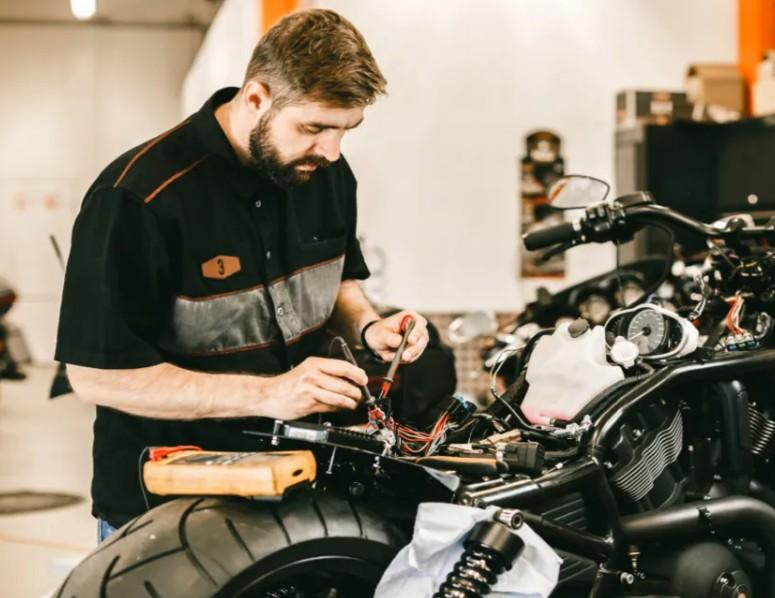
In the transition from traditional mechanical cables to sophisticated electronic throttle control, modern motorcycles have gained incredible features such as traction control, multiple ride modes, and cruise control. However, this advancement introduces a new set of mechanical and electronic challenges, primarily centered around "Ride-by-Wire (RbW) Drift." This phenomenon occurs when there is a perceptible lag or inconsistency between the rider’s physical twist of the throttle grip and the actual movement of the butterfly valves in the throttle body. Unlike a frayed cable that offers a tactile warning, RbW issues are often silent and intermittent, manifesting as a "soft" throttle response or a frustrating hesitation during mid-corner acceleration. Understanding the digital handshake between the Accelerator Position Sensor (APS) and the Throttle Actuator Control (TAC) is a vital skill for the modern garage.
The Architecture of Electronic Throttle Control
To diagnose RbW drift, one must first understand the signal path. When you twist the throttle, you are no longer pulling a steel wire; instead, you are rotating a magnet or a wiper across a potentiometer within the APS. This sensor sends a voltage signal—typically a dual-redundant signal for safety—to the Engine Control Unit (ECU). The ECU processes this request based on current engine RPM, gear position, and lean angle, before sending a command to an electric motor on the throttle body to open the butterfly valves. Drift occurs when there is a mismatch in the expected vs. actual voltage, or when the motor itself begins to slow due to internal friction or carbon buildup around the valve edges. Mastery of these electronic schematics is a cornerstone of a professional motorbike maintenance course, as it allows a technician to visualize the invisible flow of data that powers the modern engine.
Identifying the Source of Latency: Sensor vs. Actuator
When a rider feels lag, the first task is to determine if the "request" is being sent late or if the "execution" is being delayed. A faulty APS might have "dead spots" or high resistance caused by moisture ingress, resulting in a delayed voltage spike that the ECU interprets as a slow roll-on. Conversely, the throttle body actuator might be struggling against mechanical resistance. Carbon deposits can create a "sticky" seal at the closed position, requiring more current to break the initial stiction, which the rider perceives as a jerky or lagging start to the power delivery. Using a multimeter or a dedicated OBD-II diagnostic tool to monitor the "Target Throttle Position" vs. "Actual Throttle Position" is the standard diagnostic procedure.
The Role of Software Mapping and Adaptations
Sometimes, RbW lag isn't a mechanical failure at all, but rather a "learning" issue within the ECU. Modern bikes use adaptive logic to adjust throttle response based on riding style and environmental conditions. Over time, these adaptations can "drift" away from the ideal factory settings, leading to a disconnected feeling at the grip. This is often resolved by performing a "Throttle Position Sensor (TPS) Reset" or an adaptation clear-through diagnostic software. Additionally, manufacturer software updates often address known latency issues by refining the algorithms that govern the butterfly valve's movement speed. Keeping a motorcycle’s firmware up to date is just as important as changing its spark plugs. A well-rounded motorbike maintenance course will cover the use of proprietary and aftermarket software tools, ensuring that the mechanic can keep the bike’s "brain" as healthy as its mechanical heart.
Physical Maintenance of the Electronic Throttle Body
Even in a digital system, physical cleanliness remains paramount. The butterfly valves are exposed to "blow-by" gases from the crankcase ventilation system, which carry oil mist and carbon. Over thousands of miles, this creates a gummy residue around the pivot points of the valve. This residue increases the torque required for the electric motor to move the valve, leading to a slower response time and, in severe cases, triggering a "limp mode" error code. Cleaning the throttle bodies with specialized aerosol cleaners—while being careful not to damage the sensitive electronic coatings—is a delicate but necessary maintenance task. Learning the correct way to strip down an airbox to access these components without stripping plastic threads or losing vacuum lines is a practical skill honed in a motorbike maintenance course, where hands-on experience prevents costly mistakes on a high-performance machine.
Future-Proofing Your Mechanical Skills
As the motorcycle industry pushes toward full electrification and even more complex rider aids, the role of the traditional mechanic is evolving into that of a systems technician. The ability to diagnose RbW drift is just the tip of the iceberg. Future systems will likely incorporate haptic feedback and even more aggressive lean-sensitive throttle maps. For the enthusiast or the aspiring professional, staying ahead of this curve requires a commitment to continuous learning.

 Turkish