
Digital Twin Simulation: Reducing Risk and Unlocking Predictive Optimization
Industrial automation has traditionally operated in a reactive mode. Systems are deployed, monitored, adjusted, and optimized over time. While effective, this process often involves trial-and-error, unexpected downtime, and costly physical corrections.
Digital twin technology fundamentally changes that dynamic.
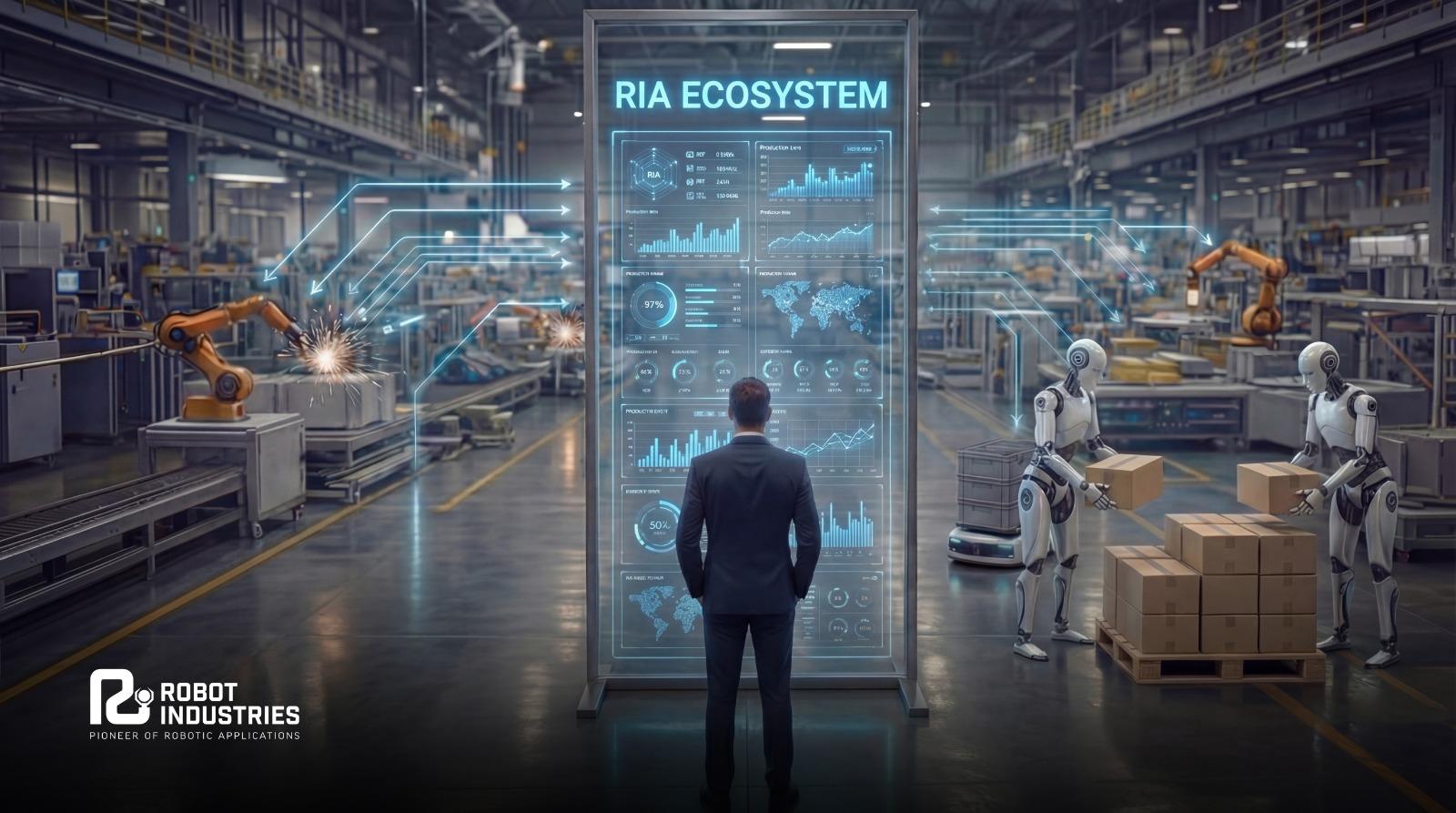
By creating a virtual replica of physical systems, digital twins allow organizations to simulate workflows, test coordination strategies, and validate mission logic before real-world deployment. Integrated within orchestration platforms such as the RiA Ecosystem Manager, digital twin capabilities redefine industrial risk management.
From Reactive to Predictive Operations
In conventional automation, inefficiencies often become visible only after production begins. Bottlenecks, synchronization issues, and misaligned task sequences reveal themselves through operational friction.
Digital twins shift this process upstream.
Before machines execute in the physical world, managers can:
- Run advanced scenario simulations
- Stress-test coordination logic
- Validate mission sequencing
- Identify performance bottlenecks
- Forecast resource utilization
This proactive validation significantly reduces implementation risk.
Preventing Costly Physical Errors
Physical production errors can be expensive:
- Equipment damage
- Production delays
- Material waste
- Safety incidents
- Reputation risk
Simulation environments dramatically lower these risks. By refining workflows virtually, organizations prevent misalignment before it affects physical infrastructure.
Companies like Robot Industries emphasize digital twin simulation as a foundational element of modern automation—not an optional add-on.
AI-Driven Continuous Optimization
Digital twins are not static models. When combined with AI analytics, they evolve continuously based on real-time performance data.
This enables predictive optimization:
- Anticipating component fatigue
- Adjusting task distribution dynamically
- Identifying efficiency gaps
- Forecasting maintenance needs
Rather than reacting to performance declines, businesses optimize continuously.
Scaling Without Disruption
Scaling operations often introduces complexity. Adding new robotic units, expanding production lines, or integrating autonomous systems can disrupt existing workflows.
Digital twin environments allow organizations to test expansions virtually before committing resources. This ensures smooth integration and prevents unintended side effects.
The result is confident scaling backed by data-driven validation.
Strategic Impact Beyond Manufacturing
While digital twins are often associated with factory floors, their applications extend further:
- Logistics and warehouse coordination
- Autonomous cleaning fleets
- Infrastructure management
- Smart building ecosystems
- Energy optimization systems
In each case, predictive modeling enhances efficiency while reducing operational risk.
The New Industrial Standard
As automation grows more autonomous and interconnected, simulation becomes essential. The complexity of orchestrated ecosystems demands advanced validation tools.
Digital twin integration transforms automation from a reactive system to a predictive, continuously optimized environment.
The future of industrial efficiency will belong to organizations that simulate first, deploy second, and optimize continuously.

 Turkish