
How to Choose the Right Steel Pipe for Different Construction Applications in Saudi Arabia
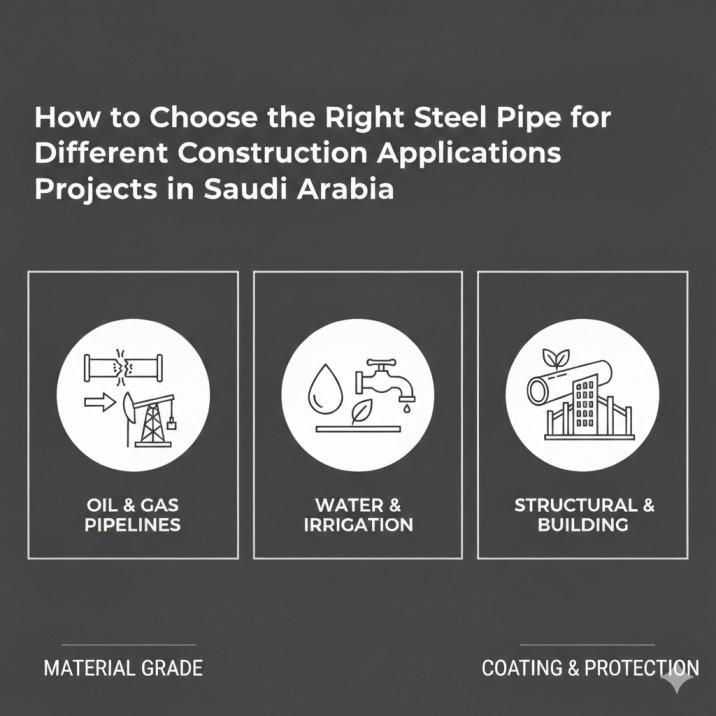
Steel pipes are used across almost every type of construction project in Saudi Arabia, from residential buildings and commercial complexes to industrial facilities and infrastructure works. While steel pipes may appear similar at first glance, choosing the wrong type for a specific application can lead to performance issues, safety risks, and unnecessary maintenance costs.
Understanding how to select the right steel pipe based on application requirements helps construction professionals ensure durability, compliance, and long-term project success.
Understanding Application Requirements
The first step in selecting a steel pipe is identifying its purpose. Pipes used for structural support serve a very different function than those used for fluid or gas transportation.
Common construction applications include:
-
Structural frames and columns
-
Water supply and drainage systems
-
Firefighting and mechanical services
-
Industrial and utility pipelines
Each application requires a specific pipe shape, grade, and wall thickness. Selecting materials without clearly defining their role often results in inefficiencies or failures. Get Help with the best manufacturing company in Saudi Arabia.
Structural vs Mechanical Steel Pipes
Structural steel pipes are designed to carry loads and resist bending, while mechanical pipes focus more on pressure and flow performance.
Structural pipes are typically:
-
Used in frames, supports, and load-bearing systems
-
Selected based on strength, wall thickness, and dimensional accuracy
Mechanical pipes are commonly used for:
-
Water distribution
-
HVAC systems
-
Fire protection networks
Using mechanical pipes in structural applications can compromise safety, while structural pipes may be unnecessarily costly for simple fluid systems.
Selecting the Correct Pipe Shape
Pipe shape plays an important role in how loads are distributed and how easily materials can be fabricated.
-
Round pipes are widely used for fluid transport and mechanical systems
-
Square and rectangular pipes are preferred for structural applications due to uniform load distribution and ease of alignment
Selecting the appropriate shape improves both performance and installation efficiency.
Considering Environmental Conditions
Saudi Arabia’s environment presents unique challenges for steel pipes. High temperatures, humidity, and coastal exposure increase the risk of corrosion and material degradation.
Before selecting steel pipes, consider:
-
Indoor or outdoor installation
-
Underground or exposed placement
-
Proximity to coastal or industrial areas
In harsh environments, corrosion-resistant treatments or protective coatings become essential for long-term durability.
Wall Thickness and Load Capacity
Wall thickness directly affects a steel pipe’s ability to handle loads and pressure. Thin-walled pipes may be adequate for low-pressure systems but are unsuitable for structural or high-stress applications.
Key considerations include:
-
Static and dynamic load requirements
-
Internal pressure levels
Safety margins for future use
Engineering calculations should guide wall thickness selection rather than cost alone.
Compliance With Standards and Regulations
Construction projects in Saudi Arabia must follow specific standards to ensure safety and regulatory approval. Steel pipes manufactured under recognized specifications provide consistent performance and predictable behavior.
Using compliant materials:
-
Simplifies inspections
-
Reduces project delays
-
Ensures compatibility with engineering designs
Always verify material certifications and test reports before installation.
Importance of Quality and Consistent Supply
Quality variations in steel pipes can cause installation challenges and performance issues. Inconsistent dimensions, surface defects, or improper welding may lead to early failure.
Working with reliable suppliers ensures:
-
Consistent material quality
-
Proper documentation
-
Timely delivery
This reliability is especially important in large or time-sensitive construction projects.
Long-Term Cost Considerations
While lower-priced steel pipes may seem attractive, they often increase long-term costs due to frequent repairs and replacements. Higher-quality materials typically offer better value through durability and reduced maintenance.
Evaluating lifecycle cost rather than initial price helps project teams make smarter procurement decisions.
Conclusion
Choosing the right steel pipe for construction applications in Saudi Arabia requires more than selecting a size or shape. Application requirements, environmental conditions, standards compliance, and long-term performance must all be considered.
By carefully evaluating these factors and involving technical teams early in the selection process, construction professionals can avoid common mistakes and ensure reliable, cost-effective outcomes.
Proper steel pipe selection supports safer construction, smoother execution, and lasting project value.

 English