
Speaking Naturally: How Voice-Activated Assistant Technology and AI Virtual Assistant Solutions Are Democratizing Technology Access
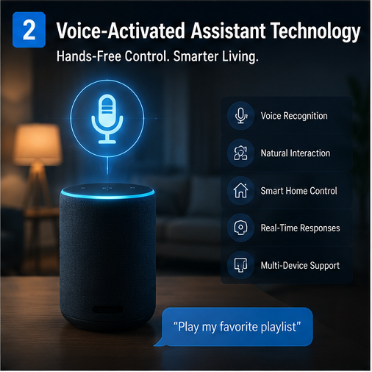
For millions of people around the world, traditional computing interfaces present significant barriers. Typing requires dexterity and vision. Reading screens demands literacy and language proficiency. Navigating menus assumes technical familiarity that many simply do not possess. These barriers have created a digital divide that excludes significant portions of the population from the benefits of modern technology. Voice-Activated Assistant Technology is changing this reality by replacing keyboards, mice, and touchscreens with the most natural human interface of all: speech. Suddenly, technology becomes accessible to those who cannot type, cannot read, or cannot navigate complex menus.
This democratization of access is being driven by sophisticated AI Virtual Assistant Solutions that understand natural language, adapt to individual speech patterns, and provide spoken responses that anyone can understand. A grandmother who has never sent an email can now ask her virtual assistant to "call my daughter." A child learning to read can ask "what does this word mean?" A person with limited mobility can control lights, thermostats, and entertainment systems without moving from their chair. Voice is the great equalizer, making technology work for humans rather than requiring humans to adapt to technology.
Breaking Down Barriers to Technology Access
Traditional computing interfaces assume certain abilities that not everyone possesses. Reading requires literacy and vision. Typing requires fine motor control. Navigating menus requires cognitive skills that diminish with age or injury. Voice-activated technology bypasses all of these requirements.
Assisting the Elderly
As people age, they often experience declining vision, reduced dexterity, and difficulty learning new technologies. Voice-activated assistants are ideally suited to this demographic. An elderly person can ask for news headlines, weather forecasts, and medication reminders without reading small screens or typing on tiny keyboards. They can make phone calls, send messages, and control home environments using only their voice. This independence improves quality of life and allows seniors to remain in their homes longer.
Empowering People with Disabilities
For individuals with mobility impairments, voice-activated assistants are life-changing. A person who cannot use their hands can control every smart device in their home through voice commands. They can dictate documents, browse the internet, and communicate with others without assistance. For individuals with visual impairments, voice output provides access to information that would otherwise be unavailable. For those with cognitive disabilities, natural voice interfaces are far easier to understand than complex graphical user interfaces.
Serving the Digitally Hesitant
Not everyone who struggles with technology has a disability. Millions of people simply never developed digital literacy skills or feel anxious about using computers. Voice-activated assistants offer these individuals a gentle on-ramp to technology. Asking a question feels natural and low-pressure compared to typing a search query. The immediate, conversational response builds confidence and encourages further exploration.
The Technology Behind Natural Voice Interaction
Making voice-activated technology work for diverse users requires sophisticated AI that can understand different accents, speech patterns, and language abilities.
Accent and Dialect Adaptation
Early voice recognition systems struggled with anyone who did not speak standard, unaccented English. Modern AI virtual assistant solutions are trained on diverse speech samples that include regional accents, non-native speakers, and various dialects. The systems continuously learn and adapt, improving their accuracy for individual users over time. Someone with a strong regional accent or who speaks English as a second language can now be understood reliably.
Handling Speech Impairments
Advanced voice-activated systems are being developed specifically to understand speech impairments caused by conditions like Parkinson's disease, stroke, or cerebral palsy. These systems learn the unique speech patterns of individual users, enabling communication even when speech is slurred, slow, or irregular. This technology gives voice to those who have difficulty being understood by other humans, let alone machines.
Supporting Low Literacy Users
For individuals with limited reading ability, written interfaces are essentially inaccessible. Voice-activated assistants communicate entirely through speech, eliminating the literacy barrier. Users can ask questions and receive spoken answers, access information, complete transactions, and control devices without ever reading a single word.
Real-World Impact: Case Studies
Sarah's Story: Maintaining Independence with ALS
Sarah was diagnosed with ALS at age 52. As her condition progressed, she lost the ability to use her hands and eventually the ability to speak clearly. A voice-activated assistant trained to understand her unique speech patterns allowed her to continue communicating with family, controlling her environment, and accessing entertainment. "My voice assistant gave me back my independence," she explains. "When I couldn't press a button or even be understood on a phone call, my assistant understood me."
The Jackson Family: Supporting an Aging Parent
When 85-year-old Margaret moved in with her adult children, they worried about her safety during the day when they were at work. They installed voice-activated assistants throughout the home, connected to emergency response services. Margaret, who had never used a computer, quickly learned to say "help me" when she fell. She also uses the assistant to set medication reminders, check the weather before walks, and call family members. "I didn't think I could learn this technology," she says. "But I didn't have to learn anything—I just talk like I always do."
A School for Students with Disabilities
A specialized school for students with severe physical and cognitive disabilities integrated voice-activated assistants into every classroom. Students who cannot use standard computers can now participate in lessons, access educational content, and communicate with teachers using their voices. The assistants have been programmed with custom vocabularies relevant to the curriculum and each student's individual needs.
Enterprise Applications for Accessibility
Businesses are increasingly recognizing the accessibility benefits of voice-activated assistant technology.
Inclusive Workplace Accommodations
Employers can provide voice-activated assistants as workplace accommodations for employees with disabilities at relatively low cost. An employee with a repetitive strain injury can dictate documents instead of typing. An employee with low vision can have screen content read aloud. An employee with cognitive challenges can use voice commands to navigate complex software.
Accessible Customer Service
Companies serving diverse customer populations are deploying AI virtual assistant solutions that can accommodate various accessibility needs. Customers who cannot use websites or mobile apps can call and interact with a voice assistant that understands natural language. This is particularly important for essential services like banking, utilities, and healthcare, where accessibility is not just good business but often a legal requirement.
Public Sector Applications
Government agencies are exploring voice-activated assistants to make public services more accessible. Citizens can ask about benefit programs, schedule appointments, access forms, and receive information without navigating complex websites or waiting on hold. For citizens with disabilities or limited digital literacy, voice interfaces may be the only practical way to access government services independently.
Challenges and Considerations
Privacy for Vulnerable Populations
While voice-activated assistants offer tremendous benefits, they also raise privacy concerns—particularly for elderly or disabled individuals who may have live-in caregivers. Who has access to voice recordings? Can caregivers monitor interactions? These questions must be addressed through clear policies and technical controls.
Reliability and Emergency Situations
When voice-activated assistants are used for safety-critical applications like fall detection or emergency response, reliability becomes paramount. The system must work every time, even with speech impairments or in noisy environments. Redundant systems and fallback options are essential.
The Cost of Accessibility
While voice-activated assistants are relatively inexpensive, deploying them for accessibility purposes may require additional customization, training, and support. Organizations must budget appropriately to ensure that accessibility implementations are effective, not just performative.
The Future of Voice Accessibility
As AI virtual assistant solutions continue to advance, accessibility features will become more sophisticated and more integrated.
Emotion and Health Monitoring
Future voice-activated assistants may detect signs of health emergencies from voice patterns—a stroke affecting speech, a fall causing distress, a seizure altering vocalizations. These assistants could automatically alert emergency services while attempting to communicate with the affected individual.
Universal Design by Default
Rather than adding accessibility as an afterthought, future voice-activated systems will be designed for universal accessibility from the start. Voice interfaces will be primary, not alternative, interaction methods. This shift will benefit everyone while being essential for those who cannot use traditional interfaces.
AI Virtual Assistant Solutions are fulfilling the original promise of technology: making life better for all people, regardless of their abilities or circumstances. By enabling natural voice interaction, Voice-Activated Assistant Technology is breaking down barriers that have excluded millions from the digital world. For the elderly, the disabled, the low-literacy, and the technologically hesitant, voice assistants are not just conveniences—they are lifelines to independence, connection, and opportunity

 English