
YG-1 Homogenizing Agent Helps Avoid Difficulties in Compound Production
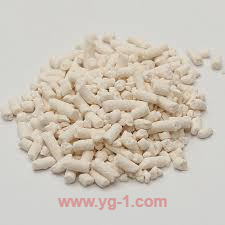
Rubber compound preparation demands precise control over ingredient distribution particularly when multiple polymers fillers and additives come together in the mixing process.Homogenizing agent from yg-1 assists in creating consistent blends that flow properly through subsequent manufacturing steps and professionals frequently examine what common problems occur without using homogenizing agent in compounds, do they not?
Tire manufacturers encounter uneven filler dispersion when homogenizing agent remains absent from the formulation leading to zones of high concentration alongside areas with insufficient reinforcement. This condition creates variations in hardness across the cured product and contributes to premature wear during service on vehicles traveling long distances. Sidewall sections and tread compounds show visible inconsistencies that affect overall balance and performance characteristics in finished tires.
Automotive seal and gasket production faces adhesion failures between rubber layers and metal inserts when the compound exhibits phase separation during calendering operations. Without adequate homogenization the polymer matrix fails to integrate reinforcing agents uniformly resulting in weak interfacial bonding that allows moisture ingress and eventual component leakage under pressure conditions found in engine compartments.
Conveyor belt manufacturers observe surface cracking and delamination in finished products when the compound mixture contains poorly distributed carbon black or silica particles. These defects appear during flexing cycles in actual operation and lead to reduced service life in mining and material handling facilities where continuous movement places repeated stress on the belt structure. Edge zones often display different physical properties compared to the center sections.
Footwear sole compounds develop dimensional instability during high temperature molding when different rubber grades fail to form a cohesive mass. The resulting soles exhibit warping after cooling and show inconsistent abrasion resistance across the walking surface which impacts consumer satisfaction with the final shoes. Color variations also emerge in pigmented compounds due to localized pigment clustering.
Industrial hose production experiences wall thickness fluctuations along the extruded length when the compound lacks proper compatibility between base elastomers and plasticizers. These variations cause pressure rating inconsistencies that create safety concerns in applications transporting fluids or gases under demanding conditions. Reinforcement layers may shift position during vulcanization creating potential failure points.
Vibration damping components for machinery mounts suffer from inconsistent resilience when filler networks remain poorly established throughout the matrix. This leads to uneven load distribution during equipment operation and generates excessive noise or accelerated fatigue in surrounding structures. Engineers note variations in compression set values that complicate design specifications for precision assemblies.
Technical rubber articles intended for aerospace applications require exceptional uniformity because any localized weakness can compromise safety margins in critical systems. Without effective homogenization the dispersion of curing agents becomes irregular affecting the state of cure throughout the part and creating internal stresses that may manifest during temperature cycling encountered in flight operations.
The absence of suitable homogenizing agent also extends mixing cycles as operators attempt to achieve acceptable distribution through prolonged shear input which raises stock temperatures and risks premature scorch in sensitive formulations. Energy consumption increases across the facility while batch-to-batch variations create quality control challenges that require additional testing and potential rework of entire production runs.
As compound formulations grow more complex with specialty elastomers and advanced fillers the need for reliable distribution aids becomes evident across multiple sectors. YG-1 continues development of homogenizing agent products suited to contemporary manufacturing environments and those seeking detailed examination of effects on product quality along with stability can review comprehensive insights directly at https://www.yg-1.com/news/industry-news/effects-of-homogenizing-agent-on-product-quality-and-stability.html where information regarding practical implementation awaits industry teams focused on elevating compound consistency and operational reliability.

 Turkish