
How Carbon Fiber Wrapping Extends the Life of Aging Structures
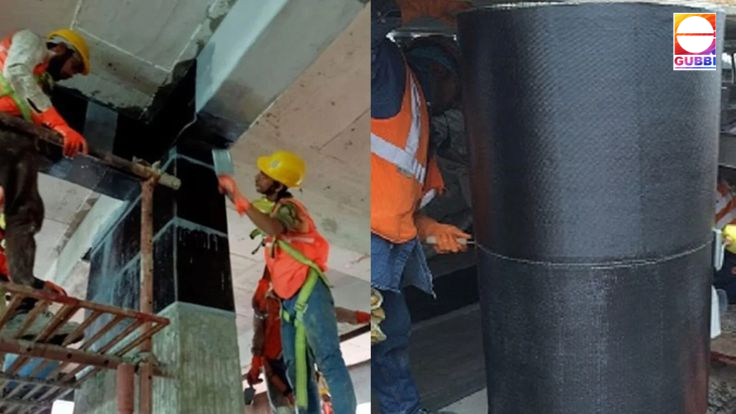
Structural deterioration is a common challenge faced by residential, commercial, and industrial buildings. Over time, concrete elements lose strength due to aging, increased loads, environmental exposure, corrosion, and design modifications. Traditional repair methods often involve extensive demolition, increased dead loads, and lengthy construction periods. This is where Carbon Fiber Wrapping has emerged as a highly effective structural strengthening technique.
Today, engineers increasingly prefer carbon fiber reinforcement because it provides exceptional strength without adding significant weight to existing structures. Whether it is carbon wrapping for columns, carbon wrapping for slabs, beams, or other structural members, this advanced strengthening method helps restore performance while minimizing disruption. As infrastructure continues to age, carbon fiber wrapping is becoming a preferred solution for extending structural life and improving safety.
What is Carbon Fiber Wrapping?
Carbon Fiber Wrapping is a structural strengthening technique that uses high-strength carbon fiber sheets bonded to concrete surfaces with specialized epoxy resins. These fibers possess remarkable tensile strength and are capable of significantly improving the load-carrying capacity of structural elements.
The wrapping process creates a composite system that works together with the existing concrete member. Once installed, the carbon fiber material enhances structural performance by increasing strength, stiffness, ductility, and resistance to cracking. Because of its lightweight nature and superior mechanical properties, carbon fiber wrapping has become a preferred choice for structural rehabilitation projects across various industries and infrastructure sectors.
Why Structural Strengthening Becomes Necessary
Many structures require strengthening after years of service. Increased operational demands, design changes, equipment additions, and environmental degradation can reduce the effectiveness of existing structural systems. Buildings that were originally designed for specific loads may eventually need to support greater loads than initially anticipated.
In addition, corrosion of reinforcement, concrete spalling, moisture penetration, and seismic requirements can compromise structural integrity. Property owners often seek strengthening solutions that avoid complete reconstruction while restoring structural reliability. Carbon fiber wrapping provides an efficient alternative by enhancing structural performance without significantly increasing dimensions or adding excessive weight to the existing structure.
Key Benefits of Carbon Fiber Wrapping
One of the biggest advantages of Carbon Fiber Reinforced Polymer (CFRP) strengthening is its exceptional strength-to-weight ratio. Carbon fibers are significantly stronger than steel while remaining lightweight. This characteristic allows engineers to strengthen structures without adding substantial dead loads that could create additional design concerns.
Another major benefit is minimal disruption during installation. Unlike traditional strengthening methods that may require extensive demolition or heavy equipment, carbon fiber wrapping can often be installed quickly. The process reduces downtime, making it particularly suitable for industrial facilities, commercial buildings, bridges, warehouses, and infrastructure projects where operational continuity is critical.
Carbon Wrapping for Columns
Carbon Wrapping for Columns is one of the most widely used applications of CFRP strengthening. Columns serve as critical load-bearing elements within a structure. Any reduction in their capacity can significantly impact overall structural safety and performance.
Carbon fiber sheets are wrapped around the column surface to provide confinement. This confinement improves compressive strength and ductility while reducing the risk of brittle failure. Wrapped columns can better withstand axial loads and seismic forces. As a result, carbon wrapping is commonly used in retrofitting projects where columns require additional strength without increasing their cross-sectional dimensions.
How Carbon Wrapping Improves Column Performance
The confinement provided by carbon fiber wrapping enhances the behavior of concrete under compression. As the concrete attempts to expand under loading, the carbon fibers resist lateral deformation. This interaction increases the effectiveness of the concrete core and improves overall load-carrying capacity.
Additionally, carbon wrapping helps delay crack propagation and improves energy absorption characteristics. These benefits are particularly valuable in earthquake-prone regions where structures must withstand dynamic forces. Engineers frequently recommend carbon wrapping for columns in buildings requiring seismic retrofitting, structural rehabilitation, or load enhancement due to functional changes.
Carbon Wrapping for Slabs
Carbon Wrapping for Slabs has become increasingly popular in projects where floor systems require strengthening. Structural slabs may experience increased loading due to changes in occupancy, installation of heavy machinery, storage requirements, or modifications to building use.
Carbon fiber sheets are bonded to the underside of slabs to improve flexural strength and load distribution. The added reinforcement helps control deflection and cracking while enhancing structural capacity. This approach allows engineers to upgrade slab performance without extensive demolition, making it an efficient solution for both existing buildings and industrial facilities.
Applications of Carbon Fiber Strengthening in Slabs
Many buildings constructed years ago were designed based on loading standards that differ from current operational requirements. Modern facilities often require additional structural capacity to support heavier equipment, expanded storage systems, or upgraded manufacturing processes.
Carbon fiber strengthening provides a practical solution for these challenges. By increasing flexural capacity and improving crack control, carbon wrapping enables slabs to accommodate increased demands. This technique is commonly used in warehouses, manufacturing plants, commercial buildings, parking structures, and institutional facilities requiring structural upgrades.
Industries Benefiting from Carbon Fiber Wrapping
Numerous industries rely on carbon fiber wrapping to maintain and improve infrastructure performance. Industrial plants use CFRP strengthening to rehabilitate aging structures exposed to harsh operating conditions. Commercial buildings benefit from strengthened columns and slabs when undergoing renovations or functional modifications.
Infrastructure projects such as bridges, tunnels, water treatment facilities, and transportation structures also utilize carbon fiber reinforcement. The versatility of this technology makes it suitable for a wide range of applications where structural reliability and long-term durability are essential objectives. Its adaptability continues to drive widespread adoption across engineering sectors.
The Carbon Fiber Wrapping Installation Process
Successful carbon fiber strengthening begins with a detailed structural assessment. Engineers evaluate existing conditions, identify deficiencies, and determine the required strengthening strategy. This analysis ensures that the design addresses specific performance requirements and structural objectives.
The concrete surface is then prepared by removing contaminants, repairing damaged areas, and creating a suitable bonding substrate. After preparation, epoxy resin is applied, followed by placement of carbon fiber sheets according to engineering specifications. Additional resin layers are used to ensure complete bonding. Once cured, the composite system becomes an integral part of the structure.
Factors Affecting Carbon Fiber Wrapping Performance
The effectiveness of carbon fiber wrapping depends on several critical factors. Proper surface preparation is essential because inadequate bonding can reduce the performance of the strengthening system. Quality materials and skilled installation practices also play significant roles in achieving desired results.
Environmental conditions, structural geometry, load characteristics, and design requirements influence the selection of wrapping configurations. Engineering calculations determine the number of layers, fiber orientation, and application techniques needed to achieve target performance levels. Comprehensive quality control during installation helps ensure long-term durability and reliability.
Carbon Fiber Wrapping vs Traditional Strengthening Methods
Traditional strengthening methods often involve concrete jacketing, steel plate bonding, or section enlargement. While these approaches can be effective, they frequently increase structural weight and require substantial construction activities. In many cases, they also reduce usable space due to larger member dimensions.
Carbon fiber wrapping offers several advantages over conventional methods. The lightweight material adds minimal dead load, requires less installation time, and preserves existing structural geometry. Furthermore, carbon fiber systems provide excellent corrosion resistance, making them suitable for environments where steel-based strengthening methods may face durability challenges.
Long-Term Durability and Maintenance
One of the most attractive characteristics of carbon fiber wrapping is its durability. Carbon fibers exhibit excellent resistance to corrosion and environmental degradation when properly protected. This durability contributes to a longer service life for strengthened structures.
Routine inspections are still recommended to verify system performance and identify potential issues. However, maintenance requirements are generally lower compared to traditional steel-based strengthening solutions. This reduced maintenance burden helps property owners achieve long-term cost savings while maintaining structural safety and operational reliability.
Choosing the Right Structural Strengthening Partner
The success of any carbon fiber strengthening project depends heavily on engineering expertise and installation quality. Structural assessment, design calculations, material selection, and execution must be performed according to established engineering principles and project-specific requirements. Organizations seeking reliable strengthening solutions should work with experienced specialists capable of delivering comprehensive structural rehabilitation services. Companies such as Gubbi Civil Engineers Limited provide engineering-driven approaches to structural assessment, retrofitting, rehabilitation, and strengthening projects, ensuring that each solution aligns with safety standards and long-term performance objectives.
Carbon Fiber Wrapping, Carbon Wrapping for Columns, and Carbon Wrapping for Slabs have transformed the field of structural strengthening. By combining exceptional strength, lightweight properties, corrosion resistance, and efficient installation, carbon fiber systems offer a practical solution for extending the life of existing structures. As buildings and infrastructure continue to age, the demand for advanced strengthening techniques will continue to grow. Carbon fiber wrapping provides engineers and property owners with a reliable method for improving structural performance without extensive reconstruction. Whether addressing load increases, deterioration, seismic upgrades, or rehabilitation requirements, carbon fiber strengthening remains one of the most effective and innovative solutions available in modern structural engineering.

 English