
Optimizing Data Infrastructure: The Essential Guide to Time-Series Management
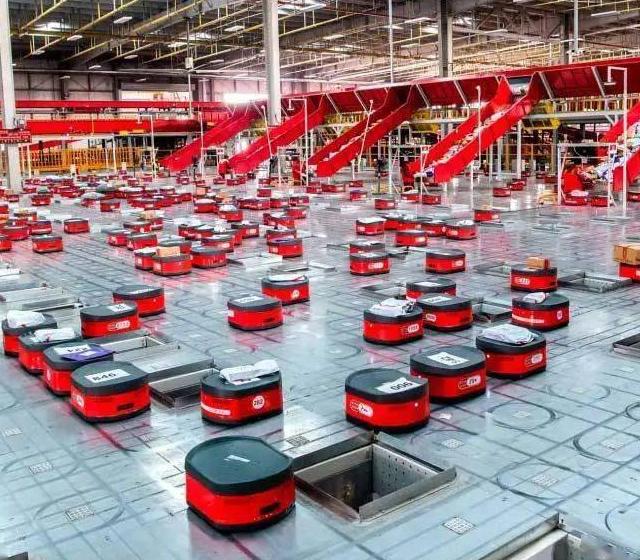
In the rapidly expanding landscape of Industry 4.0 and large-scale infrastructure monitoring, organizations are generating unprecedented volumes of sensor telemetry and machine data. Traditional relational database management systems often falter under the pressure of continuous, high-frequency write operations, leading to significant performance degradation as data accumulates. Consequently, enterprises are increasingly adopting a distributed time series database open source solution to ensure their data architecture can scale horizontally, handle massive ingestion rates, and remain resilient against the inevitable hardware failures of distributed environments.
Architectural Foundations of High-Performance Systems
The core challenge of managing time-series data lies in the balance between high-throughput ingestion and low-latency query performance. Purpose-built systems achieve this by moving away from row-oriented storage toward columnar formats, which are inherently more efficient for the types of analytical queries—such as time-windowed aggregations, trend detection, and anomaly identification—that are critical to industrial operations. By leveraging advanced delta-of-delta encoding and other specialized compression techniques, these databases can reduce the physical storage footprint by an order of magnitude compared to general-purpose alternatives.
Furthermore, these architectures are designed with distributed computing principles at their core. By sharding data across a cluster of nodes, the system can parallelize both ingestion and processing, ensuring that the performance bottleneck shifts from the database engine to the underlying network or storage hardware. This horizontal scalability allows organizations to start small and add nodes as their data volume grows, providing a predictable and sustainable path to managing petabyte-scale datasets.
Criteria for Selecting the Ideal Data Technology
When determining the best open source time series database for your specific requirements, it is essential to look beyond raw benchmarks and focus on ecosystem integration. The best solution is one that fits seamlessly into your existing stack, supporting standard industrial protocols like MQTT, OPC-UA, or Modbus, and providing native SQL compatibility. SQL support is particularly valuable as it lowers the barrier to entry for engineering teams, allowing them to leverage familiar query patterns to perform complex joins between time-series telemetry and operational metadata.
Additionally, consider the maturity of the platform's community and its commitment to open standards. An active community ensures that the software is subject to constant peer review, rapid security patching, and the development of plugins that extend the database's functionality. This collaborative ecosystem is a significant asset, reducing the risk of technological stagnation and providing a wealth of shared knowledge for troubleshooting and architectural optimization.
Advanced Analytical Capabilities and Future-Proofing
Modern data management is no longer merely a storage concern; it is about extracting actionable intelligence at the edge and in the cloud. The latest generation of data platforms incorporates sophisticated mathematical functions directly into the query layer. This enables users to execute complex operations—such as linear regression, fast Fourier transforms, and multi-variable correlations—directly on the raw data stream. Shifting this computational burden closer to the data reduces latency and minimizes the need to move large datasets into separate analytical environments, thereby accelerating the time-to-insight.
Looking ahead, future-proofing your data infrastructure requires selecting a platform with a modular, hardware-agnostic design. As storage technologies evolve and cloud-native computing matures, a well-architected system will allow for seamless upgrades and transitions between different deployment models, such as edge-to-cloud synchronization or tiered storage architectures. This flexibility ensures that the investment made today continues to yield value as the business’s monitoring requirements and data complexity evolve over the coming years.
The Operational Advantages of an Open-Source TSDB
Adopting an open-source tsdb provides the transparency and autonomy necessary for high-stakes industrial operations. Unlike proprietary software, which can create a "black box" around critical data, open-source solutions allow engineers to inspect the code, audit security protocols, and implement custom logic that fits the unique operational nuances of their environment. This transparency is a cornerstone of modern cybersecurity, ensuring that data integrity and access controls are fully visible and verifiable.
Furthermore, the open-source model eliminates the burden of restrictive, per-node or per-tag licensing fees. By removing these financial barriers, organizations can focus their budget on expanding their sensor networks, enhancing the fidelity of their data, and developing more sophisticated predictive maintenance models. This creates a virtuous cycle where the cost of infrastructure remains decoupled from the value generated by the data, allowing the organization to scale its operations with maximum efficiency.
Best Practices for Scaling and Data Lifecycle
Maintaining high performance as data volume grows requires a disciplined approach to schema design and data lifecycle management. One of the most effective strategies is the implementation of tiered storage, where high-granularity data is kept in fast-access, high-performance tiers for real-time monitoring, while older, aggregated data is moved to more cost-effective object storage for long-term trend analysis. Automated downsampling—converting second-by-second measurements into hourly averages—is a standard practice that keeps the database lean and responsive.
Additionally, managing tag cardinality is crucial. By carefully choosing which metadata should be indexed as tags versus stored as fields, engineers can prevent the database index from becoming bloated, which is a common cause of performance degradation in large-scale deployments. Regularly auditing query execution plans and monitoring for high-latency tasks ensures that the cluster remains tuned for optimal performance throughout its entire operational lifecycle.
Bridging the Gap Between IT and OT
The successful integration of Information Technology (IT) and Operational Technology (OT) is a key hallmark of a digitally mature organization. A purpose-built, distributed time-series engine acts as the connective tissue between these domains, providing a unified source of truth that is accessible to both maintenance engineers on the factory floor and data scientists in the corporate office. By standardizing on a single, high-performance platform, companies break down the silos that often hinder innovation and slow down decision-making.
This synergy allows for a holistic view of the enterprise, where local operational alerts can be immediately correlated with global business metrics. When organizations achieve this level of transparency, they are better positioned to optimize production, reduce waste, and improve the overall reliability of their systems, all of which are critical for staying competitive in a globalized, data-driven economy.
Conclusion
The selection of a data platform is one of the most foundational decisions an organization can make. By prioritizing a distributed time series database open source, enterprises gain the horizontal scalability, high performance, and operational transparency required to master their telemetry data. Utilizing the best open source time series database ensures that engineering teams can focus on innovation rather than infrastructure maintenance. Ultimately, committing to a reliable open-source tsdb provides a strategic path toward sustained operational excellence and deeper data-driven insights. As industrial environments continue to become more interconnected and complex, the importance of these specialized storage solutions will only continue to grow, serving as the essential backbone for the intelligent, automated systems of the future.

 English