
Getting the Most Out of Your Knapsack Mist Duster
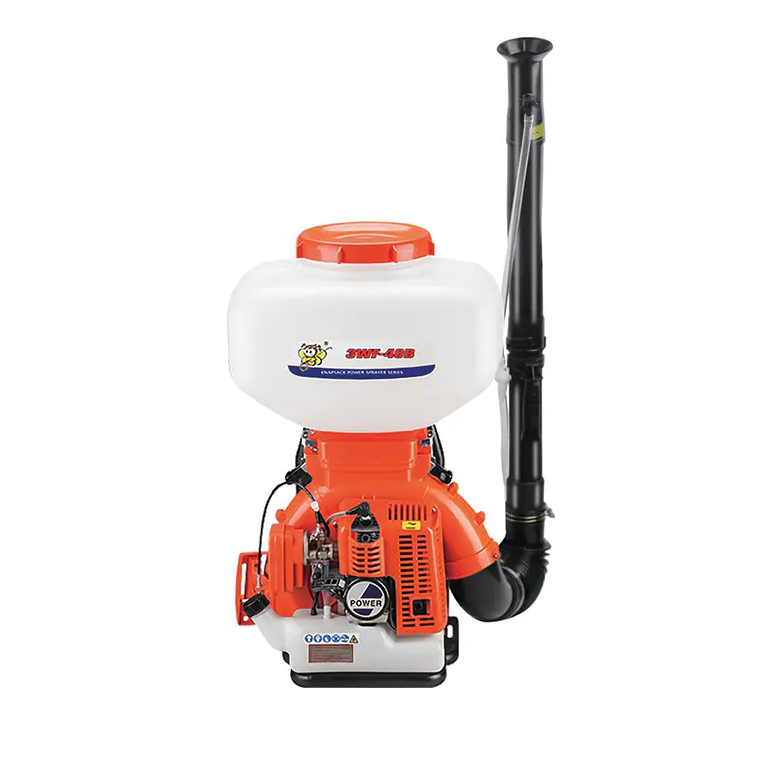
Not every piece of agricultural equipment earns a long-term place in the tool shed, but the knapsack mist duster is one that tends to stick around. Once you've used one effectively — watching a fine, even cloud of mist settle across a row of plants in a fraction of the time it would take with a handheld sprayer — it's difficult to go back to slower methods.
Understanding how a knapsack mist duster generates its output helps you get more from it. The blower unit, driven either by a motor or manual operation, creates a strong, directed airflow through the duster body. As this airflow passes the chemical inlet point, it draws liquid or powder into the stream and breaks it into very fine particles. The nozzle then shapes and directs the resulting mist or dust cloud toward the target area. Airspeed, nozzle angle, and walking pace all influence how the material distributes across the crop.
Calibration is a step that some operators skip but really shouldn't. Running a quick water test before loading chemical — timing how long it takes to empty a measured quantity through the nozzle at your normal walking speed — gives you a reliable sense of your actual application rate. Without that baseline, it's easy to over-apply in some areas and under-apply in others, which wastes product and can leave uneven pest or disease control across the field.
The knapsack mist duster performs across a wide range of applications beyond conventional row crops. Orchard operators find it useful for applying fungicide treatments to fruit trees, where getting coverage high into the canopy and onto branch undersides would be difficult with ground-level equipment. Greenhouse growers use compact knapsack mist duster models to treat plants in enclosed spaces where larger machinery simply won't fit. Even nurseries and landscaping operations find the equipment handy for treating ornamental plants across varied terrain.
Fuel efficiency in motorized knapsack mist duster models is worth considering alongside raw performance. A unit that burns through fuel quickly adds to operating costs and requires more frequent stops during fieldwork. Well-designed engines balance output power with reasonable consumption, so the operator can cover meaningful ground before needing to refuel.

 English