
Graphite Density: Definition, Importance, and Applications in Modern Industries
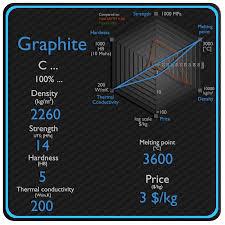
Graphite Density is a key physical property that describes the mass of graphite per unit volume. It is an important factor in determining the quality, strength, and performance of graphite materials used in different industries. Graphite is widely known for its excellent electrical conductivity, thermal resistance, and chemical stability. Because of these unique properties, it is used in many modern technologies, including batteries, electronics, metallurgy, and aerospace engineering.
Understanding graphite density helps engineers and manufacturers select the right type of graphite for specific industrial applications. In this article, we will explain what graphite density is, how it is measured, factors that affect it, and its importance in various industries.
What Is Graphite Density?
Graphite density refers to the amount of mass present in a specific volume of graphite. It is typically measured in grams per cubic centimeter (g/cm³). The theoretical density of pure graphite is approximately 2.26 g/cm³, but in practical applications the density may vary depending on the type of graphite and its manufacturing process.
Graphite exists in several forms, and each type has a slightly different density range. These variations are mainly caused by differences in structure, porosity, and processing methods.
Common forms of graphite include:
-
Natural graphite
-
Synthetic graphite
-
Expanded graphite
-
Isostatic graphite
Each form is designed for specific industrial purposes.
Why Graphite Density Matters
Graphite density plays an important role in determining how graphite performs in real-world applications. Higher or lower density levels affect mechanical strength, thermal performance, and electrical conductivity.
Mechanical Strength
High-density graphite generally has stronger structural properties. It can withstand higher pressure and mechanical stress, making it suitable for industrial machinery and high-temperature equipment.
Electrical Conductivity
Graphite is widely used as an electrical conductor. Graphite with higher density typically provides better electrical conductivity, which is essential in battery and electrode applications.
Thermal Conductivity
Graphite is known for its excellent heat resistance and thermal conductivity. Higher density graphite materials transfer heat more efficiently, making them suitable for high-temperature environments such as furnaces.
Durability and Chemical Resistance
Dense graphite has fewer pores and defects. This improves its resistance to chemical corrosion and oxidation, which increases the material's lifespan.
Types of Graphite and Their Density
Different graphite materials have different density ranges depending on their structure and manufacturing process.
Natural Graphite
Natural graphite is mined from the earth and then processed for industrial use. Its density typically ranges between 2.1 and 2.3 g/cm³.
Natural graphite is commonly used in:
-
Lubricants
-
Battery anodes
-
Refractory materials
-
Foundry molds
Synthetic Graphite
Synthetic graphite is produced through high-temperature processing of carbon materials. Its density usually ranges between 1.6 and 2.1 g/cm³ depending on the production method.
Synthetic graphite is widely used in:
-
Lithium-ion batteries
-
Electrodes
-
Nuclear reactors
-
Electric arc furnaces
Expanded Graphite
Expanded graphite is created by heating graphite flakes, which causes them to expand into a low-density structure. This type of graphite has much lower density compared to natural graphite.
Expanded graphite is used in:
-
Fire-resistant materials
-
Thermal insulation
-
Sealing and gasket products
Isostatic Graphite
Isostatic graphite is a high-quality form of synthetic graphite produced using isostatic pressing techniques. It offers uniform density and excellent structural stability.
This type of graphite is often used in:
-
Semiconductor manufacturing
-
Aerospace technology
-
High-performance industrial equipment
Factors That Affect Graphite Density
Several factors influence the final density of graphite materials.
Raw Material Quality
The purity and structure of the carbon source play a major role in determining graphite density.
Manufacturing Techniques
Different production processes such as pressing, baking, and graphitization affect the final density and structure of graphite.
Porosity
Graphite often contains microscopic pores. Higher porosity reduces density, while lower porosity increases it.
Heat Treatment
High-temperature treatment during production can increase graphite density and improve its mechanical properties.
Industrial Applications of Graphite Density
Graphite density plays an important role in determining which graphite materials are suitable for specific industries.
Lithium-Ion Batteries
Graphite is commonly used as the anode material in lithium-ion batteries. The density of graphite directly affects the battery’s energy storage capacity and performance.
Metallurgy Industry
Graphite is used in crucibles, molds, and furnace components in the metallurgy industry. High-density graphite can withstand extremely high temperatures and chemical reactions.
Electronics Industry
Because graphite conducts electricity efficiently, it is widely used in electronic components, electrodes, and conductive coatings.
Aerospace and Automotive Industries
Graphite materials with controlled density are used in aerospace and automotive components due to their lightweight nature and ability to handle extreme temperatures.
Benefits of High-Density Graphite
High-density graphite provides several advantages in industrial applications.
Increased Strength
Dense graphite materials have stronger structures and can withstand higher stress levels.
Better Heat Transfer
High-density graphite improves thermal conductivity, making it suitable for high-temperature processes.
Longer Service Life
Graphite with fewer pores and defects generally lasts longer and performs more reliably.
Improved Electrical Performance
Dense graphite provides better conductivity, which is essential for batteries and electrical systems.
Frequently Asked Questions (FAQs)
What is the density of graphite?
The theoretical density of pure graphite is about 2.26 g/cm³, but practical graphite materials may have densities ranging from 1.6 to 2.3 g/cm³ depending on their type and manufacturing process.
Why is graphite density important?
Graphite density affects the material’s strength, conductivity, thermal performance, and durability in industrial applications.
How is graphite density measured?
Graphite density is measured by dividing the mass of the graphite sample by its volume, usually expressed in grams per cubic centimeter.
Which industries use graphite materials?
Industries such as battery manufacturing, metallurgy, electronics, aerospace, and automotive engineering rely heavily on graphite materials.
Does higher density graphite perform better?
In many applications, higher density graphite offers better strength and conductivity. However, the ideal density depends on the specific industrial use.
Conclusion
Graphite density is one of the most important properties that determine the performance and reliability of graphite materials. It influences mechanical strength, thermal conductivity, electrical performance, and resistance to chemical reactions. Because of these factors, understanding graphite density is essential for engineers, researchers, and manufacturers working with graphite-based materials.
Different forms of graphite, such as natural graphite, synthetic graphite, expanded graphite, and isostatic graphite, offer various density levels suited for different applications. By carefully controlling graphite density during manufacturing, companies can produce materials that meet the growing demands of modern industries.
As technology continues to advance, graphite will remain a critical material in many sectors, including renewable energy, battery technology, and high-performance engineering. Proper understanding and optimization of graphite density will continue to support innovation, efficiency, and reliability in modern industrial applications.

 English