
Projection Welding: Precision and Efficiency in Modern Manufacturing
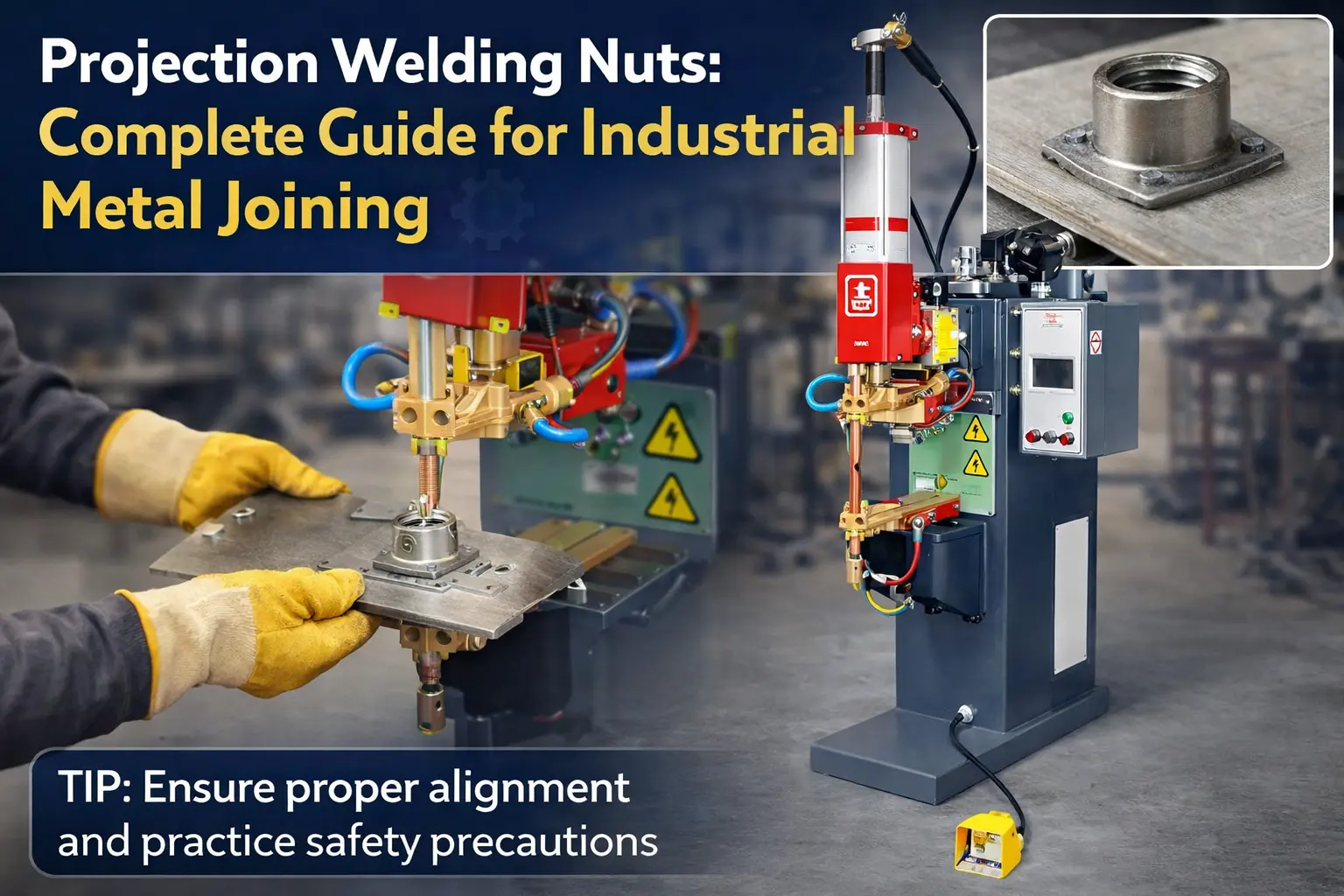
In today’s fast-paced manufacturing environment, efficiency, repeatability, and high-quality metal joining are more critical than ever. Projection welding has emerged as a preferred method for many industrial applications, offering precision and speed for joining complex assemblies. As a global leader in industrial welding equipment, Heron Welder provides advanced projection welding solutions designed to meet the needs of OEMs, automation integrators, and manufacturing engineers worldwide.
What is Projection Welding?
Projection welding is a type of resistance welding in which localized pressure and electric current are applied to a specific raised portion (projection) on a metal workpiece to form a weld. Unlike standard spot welding, projection welding concentrates the welding current on these projections, enabling:
-
Uniform weld penetration
-
Reduced electrode wear
-
Higher productivity in multi-point weld assemblies
The process works by pressing electrodes against the workpieces while current flows through the projections. The raised areas heat faster than the surrounding metal, causing localized melting and creating a strong joint.
How Projection Welding Works
Step-by-Step Process
-
Preparation of Workpieces: The metal components are designed with projections or embossments in areas that require welding. These projections determine the weld size and location.
-
Electrode Positioning: Electrodes apply pressure over the projections. Proper electrode design ensures uniform force distribution and consistent weld quality.
-
Current Application: A controlled welding current passes through the projection. The projection melts, forming a weld nugget, while the surrounding metal remains largely unaffected.
-
Cooling and Solidification: After the current stops, the molten metal solidifies under continued pressure, producing a strong, precise joint.
Key Benefits
-
Consistent Multi-Point Welding: Ideal for components requiring multiple welds simultaneously.
-
Reduced Electrode Maintenance: Projections focus the current, reducing electrode sticking and wear.
-
Energy Efficiency: Concentrated heating minimizes energy use.
-
High-Speed Production: Particularly effective in automated assembly lines.
Applications of Projection Welding
Projection welding is widely used across industries where speed, precision, and reliability are essential:
-
Automotive Manufacturing: Joining car body panels, brackets, nuts, and fasteners.
-
Electrical Components: Producing connectors, terminals, and busbars.
-
Appliance Production: Assembling HVAC units, washing machines, and kitchen equipment.
-
Metal Furniture and Fixtures: Fastening frames and metal supports.
By integrating projection welding into production lines, manufacturers achieve higher throughput with lower defect rates, making it a cost-effective and dependable choice for mass production.
Projection Welding vs. Spot Welding
While projection welding and spot welding share similarities, understanding the differences helps manufacturers select the optimal method:
| Feature | Projection Welding | Spot Welding |
|---|---|---|
| Weld Focus | Localized on projections | Direct contact between sheets |
| Electrode Wear | Lower due to current concentration | Higher, as electrodes contact larger areas |
| Multi-Point Capability | Excellent for simultaneous welding | Limited to individual welds |
| Assembly Thickness | Can handle variable thickness | Best for uniform sheet metal |
| Applications | Brackets, nuts, embossed parts | Sheet-to-sheet metal joining |
Projection welding is ideal when precision and consistency across multiple welds are required, especially in automated production environments.
Best Practices for Successful Projection Welding
To maximize weld quality and productivity, manufacturing engineers should follow these guidelines:
-
Design Projections Correctly: The size, shape, and placement of projections directly impact weld consistency and strength.
-
Choose the Right Electrodes: Electrode material and shape affect current density, pressure distribution, and longevity.
-
Optimize Welding Parameters: Fine-tune current, force, and welding time for each application to achieve defect-free welds.
-
Regular Maintenance: Keep electrodes and machinery clean to maintain consistent performance.
-
Integrate Automation: Automated projection welding cells enhance repeatability, throughput, and safety.
Heron Welder provides advanced controllers, electrode systems, and turnkey welding lines designed to support these best practices, ensuring maximum efficiency and reliability.
Why Choose Heron for Projection Welding Solutions?
Heron Welder is a trusted provider of industrial welding systems for OEMs and factory automation integrators. Our solutions include:
-
Capacitor Discharge and MFDC Projection Welders for precise, high-speed welding.
-
Custom Welding Guns and Electrodes optimized for your components.
-
Automated Production Lines integrating projection welding with robotic handling.
-
Expert Consultation on process optimization, fixture design, and maintenance planning.
With decades of experience and a global footprint, Heron ensures that every projection welding system delivers repeatable, high-quality welds while maximizing production efficiency.
Frequently Asked Questions (FAQs)
Q1: Can projection welding be used for different metals?
Yes, projection welding works with various metals, including steel, stainless steel, copper, and aluminum, provided the proper parameters and electrodes are used.
Q2: How is projection welding different from spot welding?
Unlike spot welding, which joins sheets at direct contact points, projection welding focuses the current on embossed projections, allowing multi-point, consistent welds with less electrode wear.
Q3: What industries benefit most from projection welding?
Automotive, electrical, appliance, and metal fabrication industries benefit most, particularly in high-volume, automated production environments.
Q4: How do I maintain projection welding electrodes?
Regular cleaning and checking for wear, along with proper alignment, are essential to maintain electrode life and consistent weld quality.
Q5: Can Heron customize projection welding systems for my factory?
Absolutely. Heron specializes in tailored welding solutions, including automated lines, custom electrodes, and process optimization for unique production needs.
Take the Next Step with Heron Welder
Whether you’re designing an automated production line, upgrading welding capabilities, or seeking expert advice on projection welding, Heron Welder provides the technology and expertise to elevate your manufacturing operations.
Request a quote or consultation today to explore customized projection welding and metal-joining solutions that enhance efficiency, precision, and throughput.

 English