
Heart Pumps Market Strengthens Global Cardiac Care Ecosystem with Rapid Innovation and Double-Digit Growth Forecast Through 2031
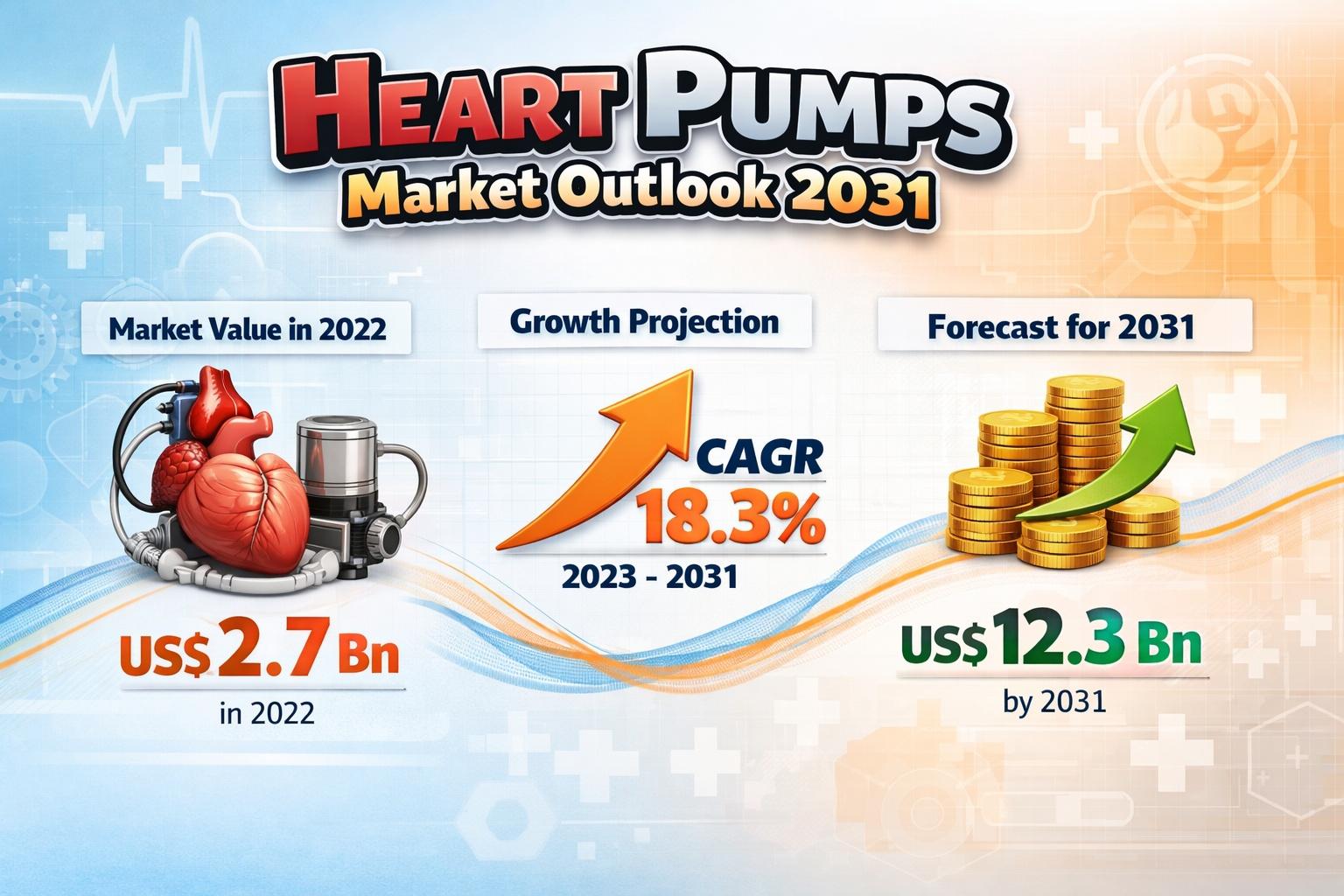
The global Heart Pumps Market is emerging as one of the most dynamic and high-impact segments within advanced medical devices. With cardiovascular diseases continuing to dominate global mortality statistics, mechanical circulatory support systems are increasingly becoming central to modern cardiac treatment strategies. Valued at US$ 2.7 billion in 2022, the market is projected to expand at a robust compound annual growth rate (CAGR) of 18.3% between 2023 and 2031, ultimately reaching an estimated US$ 12.3 billion by the end of the forecast period.
The surge in adoption of heart pumps reflects broader shifts in healthcare delivery—toward advanced interventional cardiology, life-extending technologies, and patient-centered innovations. As the burden of heart failure intensifies worldwide, these devices are playing a transformative role in stabilizing critically ill patients and improving survival outcomes.
Introduction to Heart Pumps and Their Clinical Significance
Heart pumps are mechanical medical devices designed to assist or fully replace the function of a failing heart. They are primarily recommended for patients with advanced heart failure who are unable to maintain adequate blood circulation through pharmaceutical therapy alone.
The market comprises three primary product categories:
-
Intra-aortic Balloon Pumps (IABP)
-
Ventricular Assist Devices (VADs)
-
Left Ventricular Assist Devices (LVAD)
-
Right Ventricular Assist Devices (RVAD)
-
Biventricular Assist Devices (BVAD)
-
-
Total Artificial Heart (TAH)
These devices can be implanted internally or used externally depending on the severity of the condition and therapeutic objective. In clinical practice, heart pumps are often employed under structured treatment pathways such as Bridge-to-Transplant (BTT) and Bridge-to-Candidacy (BTC).
Their ability to restore adequate blood flow, reduce symptoms like fatigue and shortness of breath, and extend life expectancy has significantly elevated their importance in cardiology.
Cardiovascular Disease Burden: A Critical Growth Driver
The rising incidence of cardiovascular diseases is the most influential driver shaping the Heart Pumps Market. Aging populations, sedentary lifestyles, rising obesity, environmental pollution, and unhealthy habits such as smoking and excessive alcohol consumption have collectively contributed to the surge in heart-related conditions.
According to the World Health Organization, cardiovascular diseases account for nearly 40% of premature deaths due to non-communicable diseases globally. The magnitude of this crisis is further highlighted by the British Heart Foundation, which estimated that 20.5 million deaths occurred due to cardiovascular diseases in 2021.
In the United States, the burden is equally significant. The CDC Foundation reports that approximately one in three adults suffers from at least one form of cardiovascular disease, underscoring the urgent need for advanced cardiac interventions.
As conventional treatments often prove insufficient in late-stage heart failure, heart pumps provide a vital alternative that sustains life while offering improved clinical outcomes.
Aging Demographics and Lifestyle Changes Fueling Demand
The global demographic transition toward an aging population is creating sustained demand for mechanical circulatory support devices. Elderly individuals are at higher risk for heart failure due to cumulative health conditions and physiological decline.
Additionally, urbanization has contributed to lifestyle changes characterized by reduced physical activity and higher consumption of processed foods. These behavioral patterns are accelerating the onset of cardiovascular diseases at younger ages, thereby expanding the patient pool requiring advanced treatment.
As healthcare systems aim to extend healthy life expectancy, the integration of heart pump technologies into cardiac care protocols is expected to intensify.
Technological Advancements Revolutionizing the Market
Innovation is redefining the competitive landscape of the Heart Pumps Market. Manufacturers are focusing on enhancing performance, safety, portability, and patient convenience.
Key technological advancements include:
-
Miniaturized implantable devices
-
Extended battery life and wireless power systems
-
Real-time remote monitoring integration
-
Advanced flow pump designs to reduce hemolysis and thrombosis
-
Biocompatible materials that lower infection risk
Flow regime innovations—centrifugal flow pumps (CFP), axial flow pumps (AFP), and mixed flow pumps (MFP)—are being optimized to ensure smoother blood flow and reduced mechanical stress.
Significant progress is also being made in Total Artificial Heart development, with companies striving to produce durable, fully implantable devices capable of replacing native heart function for extended periods.
Therapeutic Applications Expanding Market Scope
Heart pumps are deployed under clearly defined therapeutic strategies that enhance clinical flexibility.
Bridge-to-Transplant (BTT)
In BTT therapy, heart pumps support patients awaiting donor heart availability. Given the persistent shortage of donor organs globally, BTT applications are becoming increasingly common.
Bridge-to-Candidacy (BTC)
BTC therapy allows patients to receive temporary mechanical support while their eligibility for transplantation is evaluated. In some cases, patients experience sufficient recovery to qualify for transplant listing.
These therapeutic models have significantly broadened the application scope of ventricular assist devices and artificial hearts.
Growing Awareness and Government Initiatives
Increased awareness regarding heart health is another important growth factor. Governments and healthcare organizations worldwide are implementing awareness campaigns, preventive programs, and funding initiatives to combat cardiovascular diseases.
The COVID-19 pandemic further intensified public focus on cardiovascular health, as patients with pre-existing heart conditions were shown to be at greater risk of severe complications.
Greater awareness has led to:
-
Increased diagnostic screenings
-
Earlier detection of heart failure
-
Greater acceptance of advanced treatment options
-
Expanded funding for cardiac research
Such initiatives are expected to sustain demand for innovative heart pump technologies over the coming decade.
Regional Analysis
North America: Market Leader
North America holds the largest share of the global Heart Pumps Market. The region benefits from advanced healthcare infrastructure, substantial R&D investments, and favorable reimbursement policies.
The United States remains a dominant contributor due to high healthcare spending and widespread adoption of advanced cardiac technologies.
Asia Pacific: High-Growth Opportunity
Asia Pacific is anticipated to register steady growth throughout the forecast period. Rapid urbanization, increasing healthcare expenditure, and rising incidence of heart diseases are key contributors.
In India, strokes represent a major cause of mortality. According to the All India Institute of Medical Sciences, a stroke-related death occurs every four minutes, with more than 185,000 cases reported annually.
China and Japan are also strengthening their cardiac care infrastructure, creating favorable conditions for market expansion.
Europe and Emerging Regions
Europe continues to demonstrate stable growth supported by comprehensive public healthcare systems and active clinical research initiatives. Meanwhile, Latin America and the Middle East & Africa are gradually expanding their cardiac treatment capabilities, presenting long-term growth prospects.
Competitive Landscape
The competitive environment in the Heart Pumps Market is characterized by innovation-driven strategies, mergers, partnerships, and portfolio diversification.
Key industry participants include:
-
SynCardia Systems, LLC
-
Berlin Heart GmbH
-
Jarvik Heart Inc.
-
Calon Cardio-Technology Ltd.
-
Teleflex Incorporated
-
Abbott Laboratories
-
Medtronic plc
These companies are investing heavily in next-generation implantable devices that offer improved durability, enhanced mobility, and advanced monitoring capabilities.
Market Challenges
Despite promising prospects, several challenges may influence growth:
-
High cost of devices and implantation procedures
-
Risk of complications such as infection and thrombosis
-
Strict regulatory requirements
-
Limited skilled cardiac surgeons in developing countries
Ongoing innovation aimed at improving safety and reducing costs will be critical in overcoming these barriers.
Future Outlook Through 2031
The Heart Pumps Market is poised for transformative growth over the next decade. Integration of artificial intelligence, predictive analytics, and IoT-enabled remote monitoring systems will further enhance device efficiency and patient outcomes.
Fully implantable artificial hearts and wireless charging systems are expected to revolutionize patient mobility and quality of life. As cardiovascular disease prevalence continues to rise globally, healthcare systems are likely to prioritize advanced mechanical circulatory support solutions.
Strong R&D pipelines, growing awareness, and expanding healthcare infrastructure across emerging economies will collectively shape the future trajectory of the market.

 Turkish