
Blind to the Blatantly Obvious: Materialism vs Consciousness in Ron Patterson’s Provocative Perspective
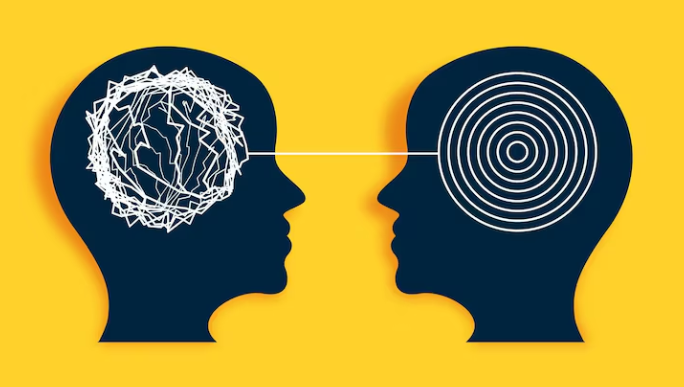
In a world dominated by data, metrics, and physical explanations, the debate between materialism vs consciousness has never been more relevant. One compelling contribution to this discussion is Blind to the Blatantly Obvious by Ron Patterson, a phrase that itself challenges how modern society interprets reality. Patterson’s ideas invite readers to reconsider what they accept as truth, especially when it comes to understanding consciousness beyond purely material explanations.
At its core, Blind to the Blatantly Obvious by Ron Patterson serves as both a critique and a wake-up call. It questions why humanity, despite unprecedented technological progress, often overlooks the most fundamental aspects of existence—awareness, perception, and inner experience. This tension lies at the heart of the long-standing conflict between materialism and consciousness.
Understanding Materialism: The Dominant Worldview
Materialism, in philosophical terms, asserts that everything that exists is fundamentally physical. According to this view, consciousness is nothing more than a byproduct of brain activity—neurons firing, chemicals interacting, and electrical impulses traveling through neural networks. Thoughts, emotions, creativity, and even self-awareness are explained as complex but ultimately mechanical processes.
This framework has driven remarkable scientific advances. Medicine, neuroscience, and artificial intelligence have all benefited from materialist assumptions. However, critics argue that materialism struggles to explain subjective experience—often referred to as the “hard problem” of consciousness. Why does brain activity feel like something from the inside? Why is there an inner world at all?
This is where the debate of materialism vs consciousness becomes unavoidable. While materialism excels at describing mechanisms, it often fails to address meaning, purpose, and lived experience.
Consciousness as Fundamental, Not Secondary
Opposing materialism is the view that consciousness is not merely an output of matter but a fundamental aspect of reality. From this perspective, awareness is primary, and the physical world emerges from or is interpreted through consciousness.
In Blind to the Blatantly Obvious by Ron Patterson, this idea is explored through a critical lens. Patterson suggests that modern culture has become so invested in external measurements that it ignores the obvious truth: all experience is filtered through consciousness. Without awareness, there is no science, no observation, and no meaning.
This argument does not deny the importance of the brain or the physical world. Instead, it questions whether physical explanations alone can ever fully account for subjective reality. Consciousness, in this sense, is not something to be reduced but something to be understood on its own terms.
Why We Are “Blind to the Blatantly Obvious”
The phrase Blind to the Blatantly Obvious by Ron Patterson captures a paradox of modern thinking. We pride ourselves on rationality and evidence-based reasoning, yet we often dismiss the most immediate evidence of all—our own awareness.
Patterson argues that this blindness is cultural rather than intellectual. Educational systems, institutions, and media reinforce materialist assumptions, leaving little room for introspection or philosophical inquiry. As a result, questions about consciousness are either ignored or treated as secondary to “real” science.
This blindness has consequences. When consciousness is reduced to a mere function of matter, human experience can feel diminished. Values such as empathy, creativity, and inner growth risk being framed as chemical accidents rather than meaningful aspects of existence.
Materialism vs Consciousness in Everyday Life
The debate of materialism vs consciousness is not limited to academic philosophy; it plays out in daily life. Consider how success is often measured—income, possessions, productivity. These material markers are tangible and quantifiable, making them easy to prioritize.
Yet many people who achieve material success still report feelings of emptiness or disconnection. This disconnect suggests that material explanations alone may not satisfy deeper human needs. Consciousness-oriented perspectives emphasize self-awareness, purpose, and inner coherence as essential components of well-being.
Patterson’s work encourages readers to notice this imbalance. By being blind to consciousness, society may be overlooking what truly sustains fulfillment.
Science, Philosophy, and the Limits of Explanation
One of the most compelling aspects of Blind to the Blatantly Obvious by Ron Patterson is its call for humility in scientific inquiry. Science is a powerful tool, but it operates within certain assumptions—chief among them, materialism.
Acknowledging the limits of these assumptions does not weaken science; it strengthens it. When scientists and thinkers remain open to the possibility that consciousness may not be fully reducible to matter, new avenues of exploration emerge. Interdisciplinary dialogue between neuroscience, philosophy, psychology, and contemplative traditions becomes possible.
This openness is essential in resolving—or at least deepening—the conversation around materialism vs consciousness.
Reclaiming Awareness in a Material World
Patterson’s perspective ultimately invites a shift in attention. Rather than seeking meaning solely in external achievements or physical explanations, he encourages a return to direct experience. Awareness, presence, and self-inquiry become tools for understanding reality from the inside out.
Being “blind to the blatantly obvious” is not a permanent condition. It is a habit—one that can be unlearned. By questioning assumptions and examining consciousness directly, individuals can gain a more balanced view of existence that honors both matter and mind.
Conclusion: Seeing What Has Always Been There
The enduring relevance of Blind to the Blatantly Obvious by Ron Patterson lies in its challenge to conventional thinking. In the ongoing debate of materialism vs consciousness, Patterson does not offer simplistic answers but encourages deeper questioning.
Materialism has given humanity incredible tools, but consciousness gives those tools meaning. Ignoring one in favor of the other leads to an incomplete picture of reality. When we stop being blind to the blatantly obvious—our own awareness—we begin to see that understanding consciousness may be the key to understanding ourselves.
In recognizing this, the divide between materialism and consciousness becomes not a battlefield, but an invitation to integrate inner experience with outer knowledge, creating a more complete and humane worldview.

 English